
Clicking “publish” on a PPC campaign without solid keyword research is like opening a shop with no sign outside. You might get foot traffic, but most of it will be the wrong kind. Keyword research determines who sees your ads, what they cost, and whether clicks turn into paying customers.
This guide cuts through the noise and gives you a repeatable process for building keyword lists that deliver genuine returns.
Understand Search Intent Before Choosing Any Keyword
Conversion rates collapse when ads appear for the wrong intent. A person typing “what is pay-per-click advertising” is learning. Someone typing “hire PPC agency Mumbai” is ready to buy. Treating both the same way destroys ROI.
Classify every keyword by intent before adding it to a campaign:
- Informational keywords — the searcher wants to learn something; poor fit for direct conversion campaigns but useful for remarketing audiences
- Navigational keywords — the searcher is looking for a specific brand or website; most valuable when bidding on your own brand terms
- Commercial investigation keywords — the searcher is comparing options (“best PPC tools 2025”); excellent for capturing mid-funnel buyers
- Transactional keywords — the searcher wants to act now (“buy”, “hire”, “get a quote”, “book online”); these belong in every conversion-focused ad group
Prioritise transactional and commercial investigation keywords when your goal is leads or sales. Informational terms burn budget unless your campaign is structured specifically for brand awareness.
Build Your Keyword List Using These Research Steps
Guesswork produces mediocre keyword lists. A structured approach surfaces terms competitors miss and filters out the ones that look promising but convert poorly.
Follow this sequence to build a high-quality PPC keyword list:
- Start with seed keywords — write down five to ten core terms that describe your product or service without any modifiers. These become the foundation of every expanded list.
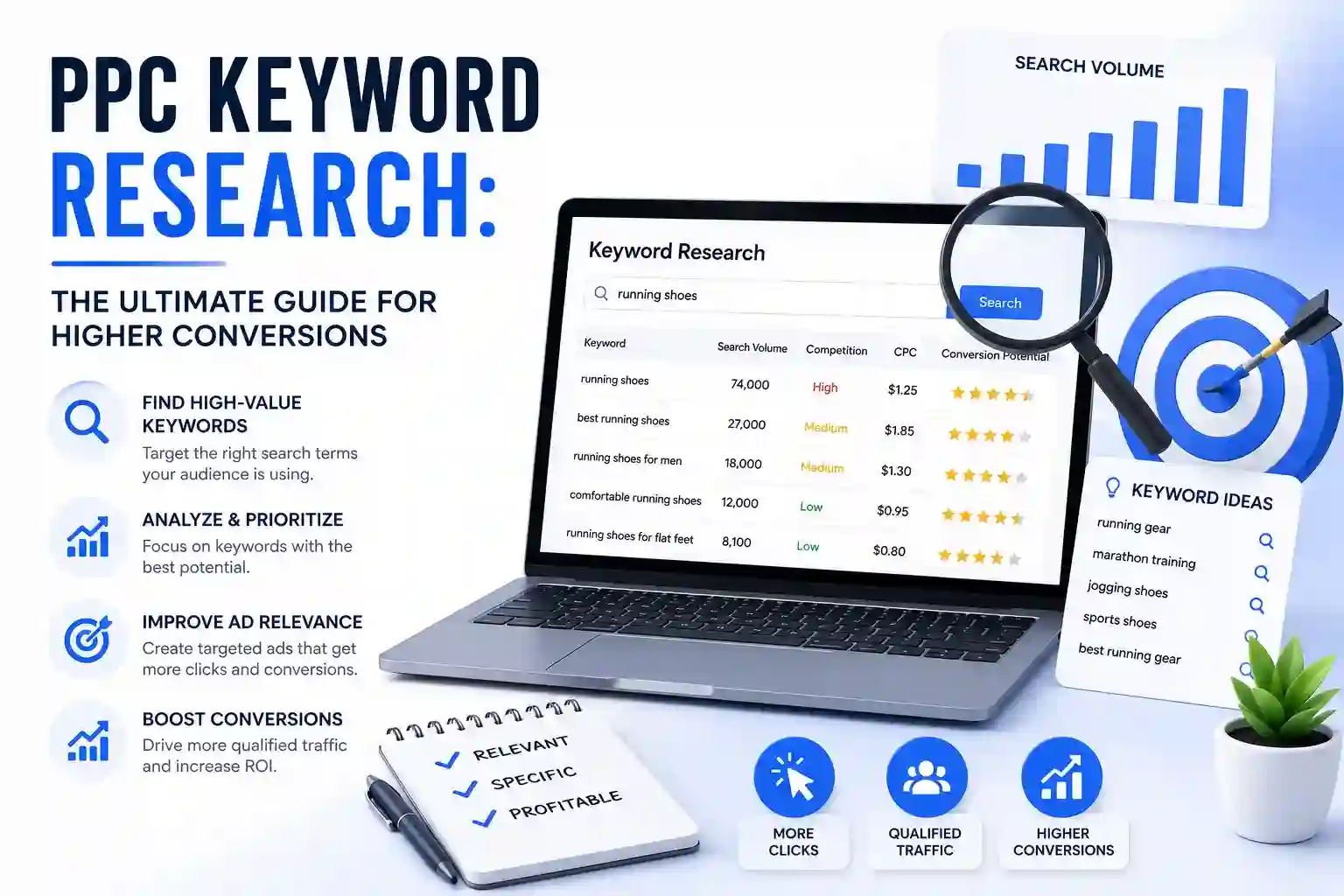
- Use keyword tools to expand — run each seed keyword through a PPC keyword tool to uncover related phrases, question-based queries, and long-tail variations with lower competition.
- Analyse competitor ad copy — tools that reveal competitor keywords show you which terms are already proven in your market rather than requiring you to test from scratch.
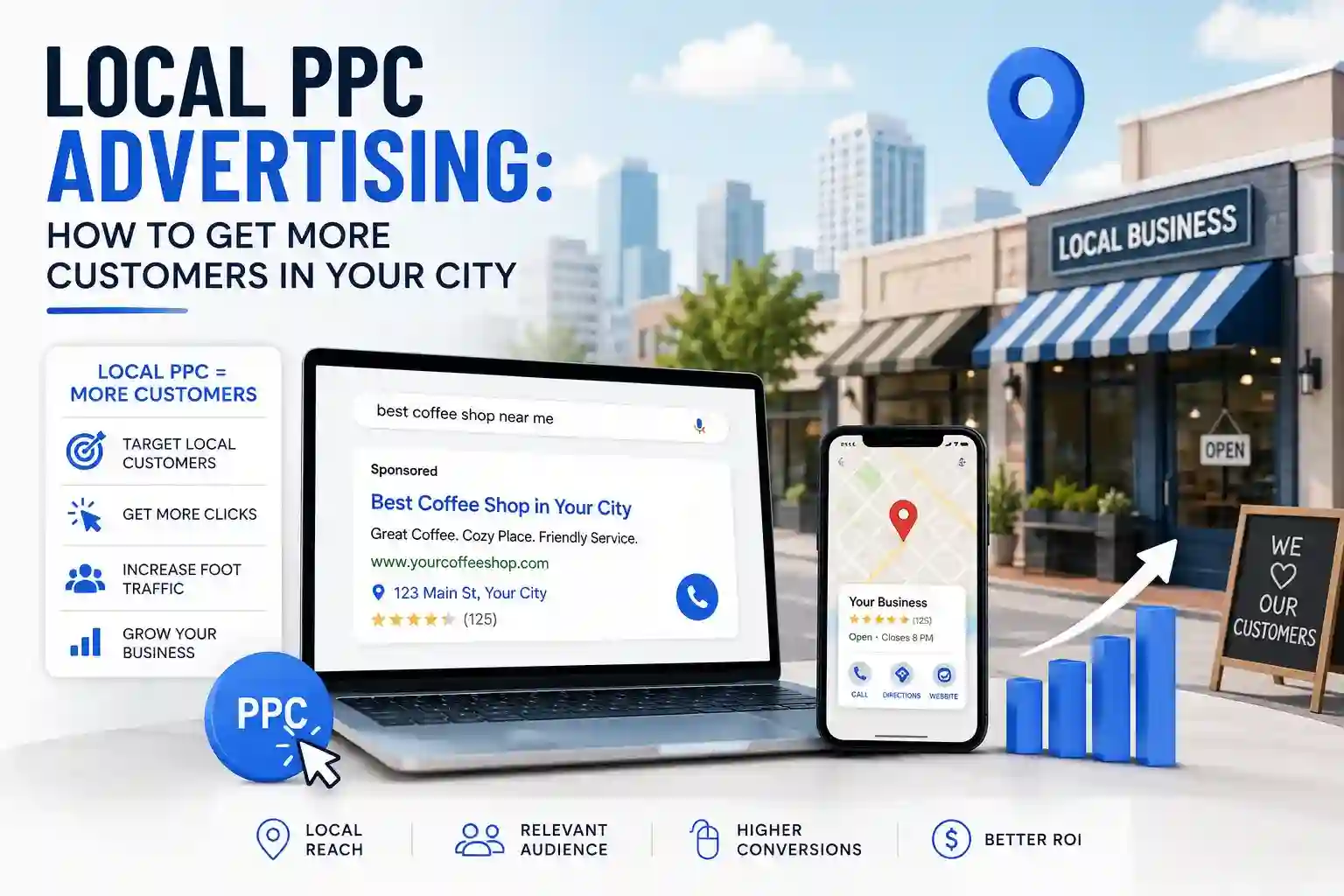
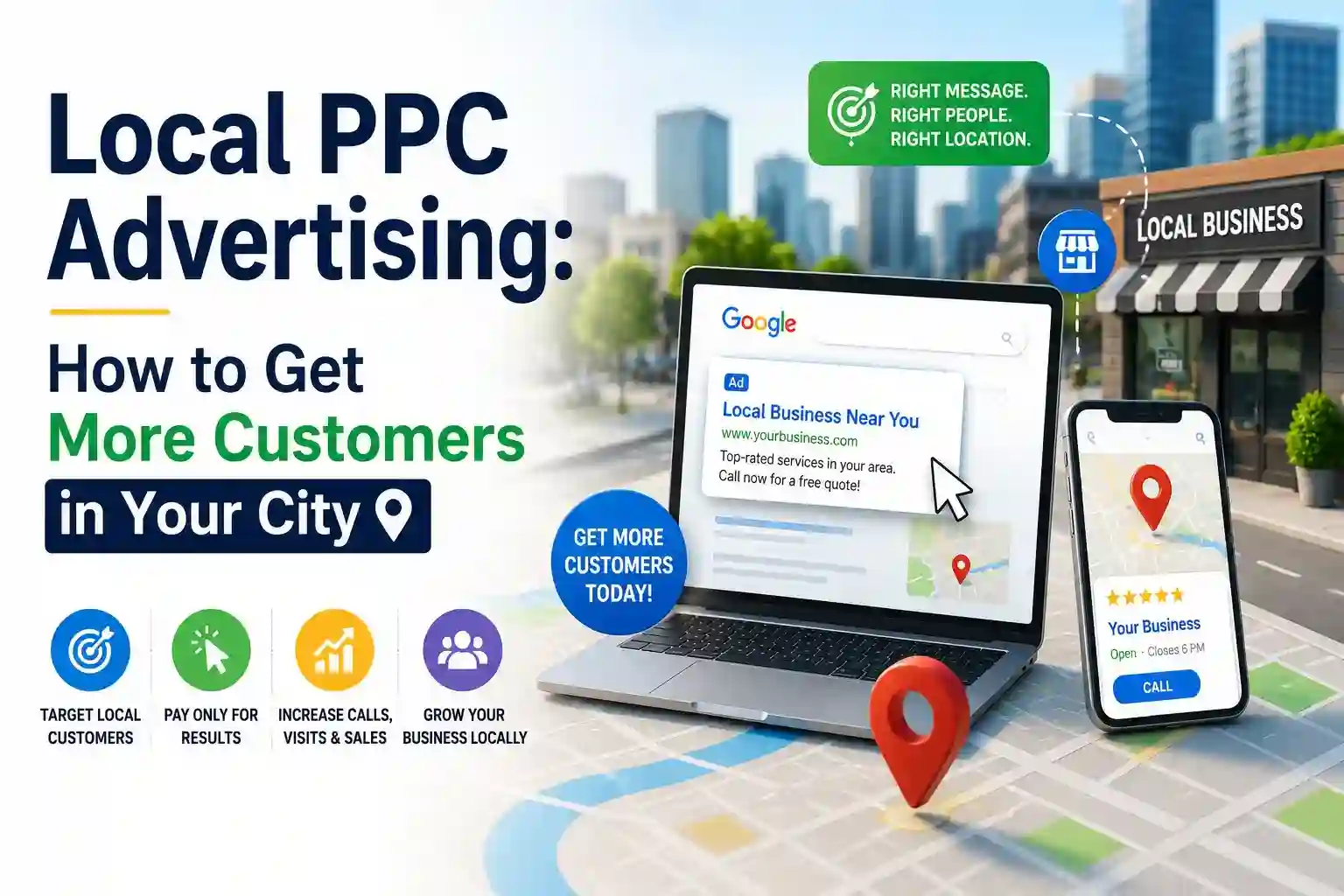
- Layer in location modifiers — for local businesses, append city, neighbourhood, and “near me” variants to capture high-intent local searches.
- Filter by CPC and volume together — a keyword with enormous volume and enormous cost-per-click can be unprofitable even with a strong conversion rate; find the balance specific to your margins.
- Group keywords into tightly themed ad groups — each ad group should contain terms so similar that a single ad speaks to all of them equally well. Loose groupings tank Quality Scores.
- Build your negative keyword list simultaneously — as you find keywords to add, note the irrelevant ones appearing nearby and block them immediately.
Revisit this process monthly. Search behaviour shifts constantly, and fresh keyword data prevents campaigns from slowly drifting off-target.
Use Match Types Strategically to Control Traffic Quality
Match types are the dial between reach and precision. Using only broad match burns through budgets. Using only exact match limits discovery. The right mix depends on campaign maturity.
New campaigns benefit from phrase match as a starting point — wide enough to capture real variations, tight enough to avoid completely irrelevant traffic. Exact match protects your highest-value terms from unwanted query expansion. Broad match makes sense only once you have a robust negative keyword list protecting the campaign from poor-fit searches.
Check your search terms report every week without exception. Real search queries that triggered your ads reveal hidden keywords worth adding and wasteful ones worth blocking. This single habit separates campaigns that scale profitably from campaigns that plateau.
Conclusion
Profitable PPC campaigns are built on keyword research that goes beyond search volume and monthly estimates. Intent classification, structured list-building, thoughtful match type selection, and an active negative keyword strategy work together to convert more clicks without inflating costs. Treat keyword research as an ongoing discipline rather than a one-time setup task, and your campaigns will keep improving long after launch.
Frequently Asked Questions
Q1: How many keywords should be in a PPC ad group?
Keep ad groups between 5 and 20 closely related keywords. Tightly themed groups allow your ad copy to stay highly relevant, which improves Quality Score and lowers your cost-per-click.
Q2: What are negative keywords and why do they matter?
Negative keywords prevent your ads from showing for irrelevant searches. Without them, broad and phrase match keywords pull in unqualified traffic that clicks without converting, wasting budget on people who were never going to buy.
Q3: Should I bid on competitor brand keywords?
Bidding on competitor terms can work when your product is a direct alternative and your offer is clearly superior. However, these clicks tend to be expensive and convert at lower rates, so test with a small budget before scaling.
Q4: What is a good Quality Score for PPC keywords?
Quality Scores between 7 and 10 indicate strong relevance between your keyword, ad copy, and landing page. Higher scores reduce your actual cost-per-click, meaning you pay less for the same ad position than lower-scoring competitors.
Q5: How often should I update my PPC keyword list?
Review your keyword list and search terms report weekly for active campaigns. Conduct a deeper keyword expansion exercise monthly to capture new search trends, seasonal variations, and emerging competitor gaps.