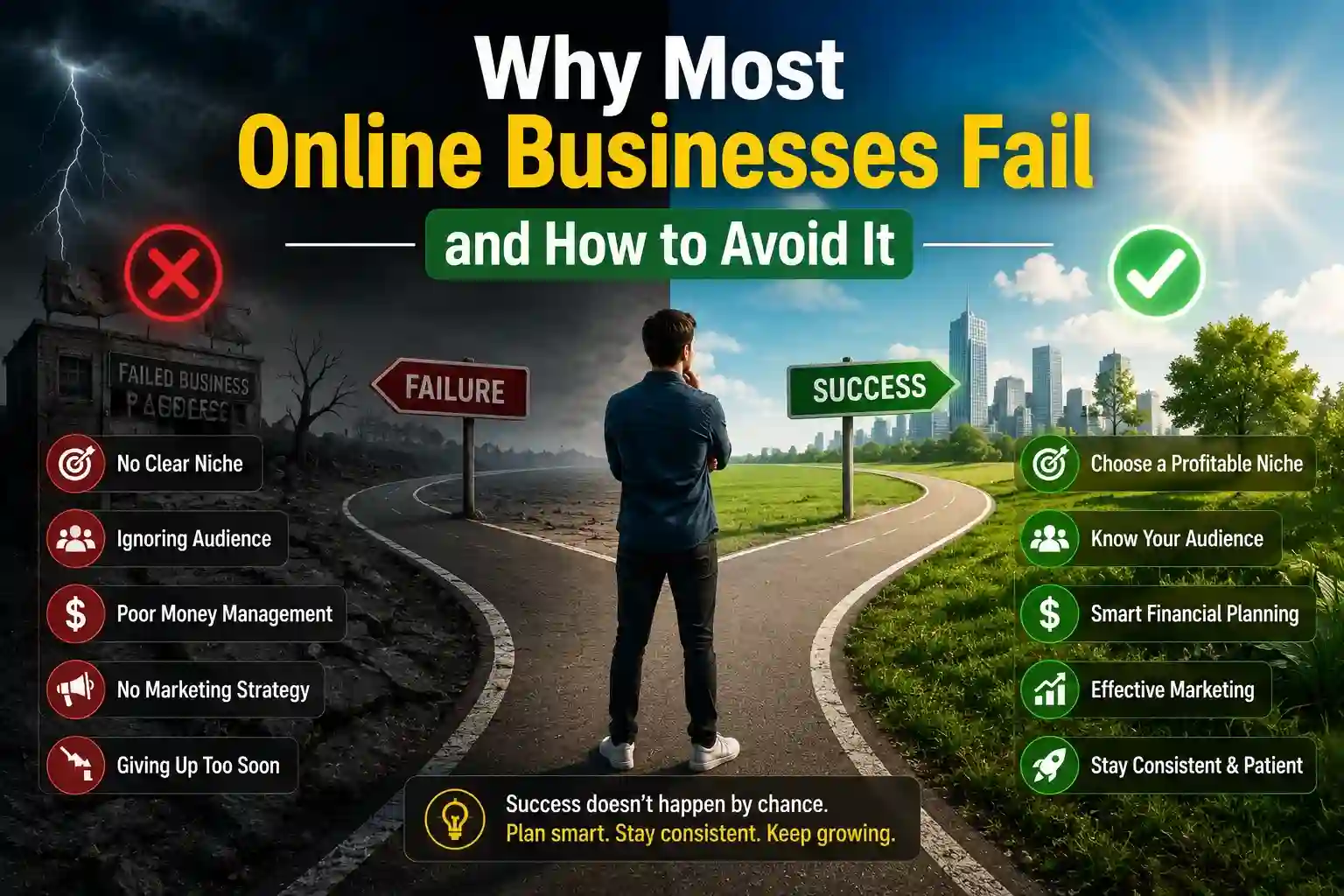


Starting an online business feels straightforward until the money starts disappearing and the results don’t follow. Most beginners don’t fail from lack of effort — they fail from spending time and money in the wrong sequence, on the wrong priorities, guided by advice that sounds credible but doesn’t survive contact with reality.
The mistakes below are expensive, common, and entirely preventable once you know what to look for.
Mistakes Made Before the Business Even Launches
The costliest errors in online business happen before a single sale is made. Poor decisions during the setup phase create structural problems that compound as the business grows — and become increasingly expensive to fix later.
- Building before validating — Investing months into a product, website, or course without confirming that a paying audience exists is the single most expensive beginner mistake. Validation costs almost nothing; rebuilding after market rejection costs everything
- Choosing the wrong business model for their skills — Beginners often select models based on income potential rather than personal capability. A technically inexperienced founder launching a SaaS product faces a steeper and more expensive path than one starting a service business around existing expertise
- Overbuilding the website — Custom development, premium themes, and elaborate functionality before the first customer wastes capital that should go toward customer acquisition and product validation
- Ignoring legal and tax structure — Operating without understanding basic business registration, tax obligations, and liability protection creates problems that cost far more to resolve than they would have to prevent
- Purchasing courses and tools instead of testing — New entrepreneurs frequently spend thousands on educational programs and software subscriptions before generating their first dollar. Learning while doing with minimal tools consistently outperforms consuming content before acting
- Selecting an unsustainable niche — Entering a market based on personal interest without researching buyer willingness to pay, competition density, or long-term demand leads to content and product investment in a niche that will never generate meaningful revenue
These decisions feel minor in the moment. Their financial consequences become clear only after the money is gone.
Operational Mistakes That Drain Revenue After Launch
Surviving the launch phase doesn’t guarantee sustainable growth. A separate set of mistakes emerges once the business is running — each quietly eroding the revenue and momentum that early effort created.
- Neglecting email list building from day one — Social media followers are rented audiences controlled by platforms that change algorithms without notice. An email list is owned, direct, and consistently the highest-converting marketing channel for online businesses
- Scaling paid advertising before achieving organic profitability — Running ads to an offer that doesn’t convert organically accelerates losses rather than growth. Paid traffic amplifies what already works — it doesn’t fix what doesn’t
- Pricing based on fear rather than value — Beginners chronically underprice services and products to avoid rejection. Low pricing attracts difficult customers, creates unsustainable unit economics, and positions the business as a budget option regardless of actual quality
- Ignoring customer retention in favor of acquisition — Acquiring new customers costs significantly more than retaining existing ones. Businesses that invest exclusively in acquisition while neglecting post-purchase experience, loyalty programs, and repeat purchase incentives rebuild their customer base from zero repeatedly
- Managing everything manually without automation — Order confirmations, follow-up emails, abandoned cart reminders, and review requests handled manually consume hours that automation covers for a fraction of the cost
- Making decisions based on vanity metrics — Website visits, social media followers, and email open rates feel like progress but don’t indicate business health. Revenue, profit margin, customer lifetime value, and acquisition cost are the numbers that determine whether a business is actually working
Each of these mistakes has a measurable cost. Identifying which ones are currently active in your business is worth more than any new strategy.
Mindset and Strategy Mistakes That Stall Long-Term Growth
Beyond tactical errors, a category of strategic mistakes prevents online businesses from reaching the scale their foundations could support.
Constantly switching business models in search of faster results is one of the most growth-limiting patterns beginners fall into. Every pivot resets the compounding that consistency builds — and most pivots are motivated by impatience rather than genuine strategic insight.
Trying to serve everyone rather than a specific audience produces generic messaging that resonates with nobody. Narrowing the target customer sharpens every marketing decision and dramatically improves conversion rates across all channels.
Avoiding uncomfortable skills — whether copywriting, SEO, financial tracking, or sales — by outsourcing them before understanding them creates permanent dependency on external providers and removes the founder’s ability to evaluate quality or troubleshoot performance.
Building without a long-term content or SEO strategy means perpetual dependence on paid traffic, which creates a business that stops growing the moment ad spend stops. Organic visibility takes longer to build but creates compounding returns that paid channels never produce.
Mistakes Are Tuition — But They Don’t Have to Be Expensive
Every experienced online business owner has a version of this list drawn from personal experience. The difference between founders who recovered and those who quit is usually awareness — knowing which mistakes to expect and building systems to avoid them before they become costly.
The most valuable investment any beginner can make isn’t a course, a tool, or an ad budget. It’s understanding the failure patterns that have ended businesses before them — and building a strategy specifically designed to avoid repeating them.
Frequently Asked Questions
Q: What is the number one mistake beginners make when starting an online business?
Building a product or service without validating demand first. Spending months creating something before confirming that people will pay for it results in significant wasted time and money that proper validation would have prevented entirely.
Q: How much should a beginner spend when launching an online business?
Most online businesses can be launched for under $300 covering domain, hosting, and basic tools. Keeping initial investment minimal forces validation before scaling and prevents the financial pressure that leads to poor early decisions.
Q: Is paid advertising a good strategy for beginner online businesses?
Only after achieving consistent organic sales first. Paid advertising should amplify a proven offer, not test whether an offer works. Beginners who run ads to unvalidated products consistently lose money without gaining useful insight.
Q: How do beginners know if their online business idea is viable before investing heavily?
Presell before building. If potential customers won’t commit to a purchase or waitlist before the product exists, the idea needs refinement. Real financial commitment from real people is the only validation that matters.
Q: When should a beginner online business owner start outsourcing tasks?
After achieving consistent revenue and identifying specific tasks that are both time-consuming and outside core strengths. Outsourcing before revenue is established adds cost without adding proportional value and removes the learning that early hands-on experience provides.