
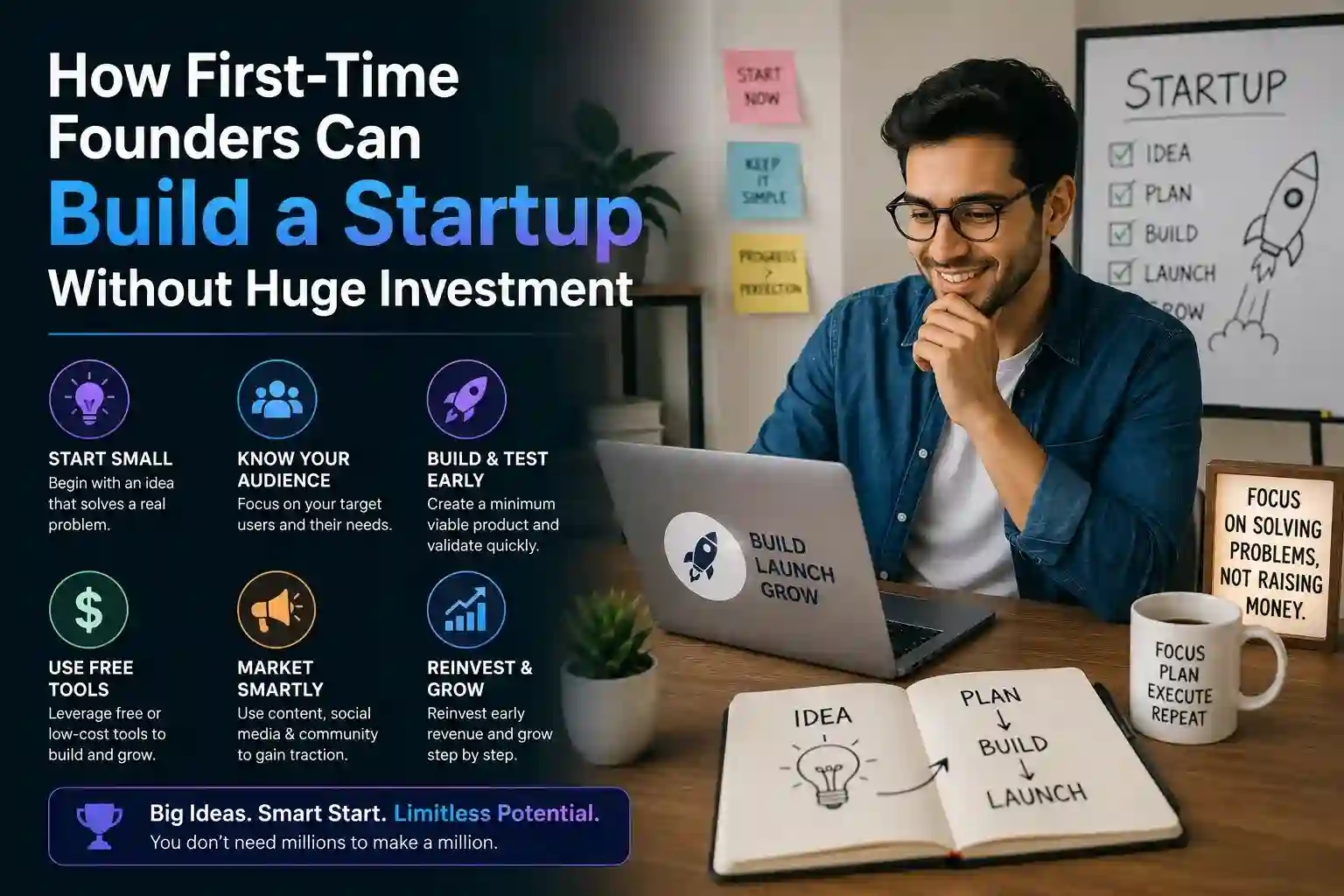
Most first-time founders believe they need significant funding before they can start. That belief kills more businesses before launch than any market condition ever could.
The reality is that capital follows proof — and proof comes from building something real with what you already have. The most resilient startups aren’t those that raised the most money early. They’re the ones that validated demand, built lean, and grew on revenue rather than runway.
Here’s how to do exactly that.
Start With Validation, Not Infrastructure
The most expensive mistake a first-time founder makes is building before confirming that anyone actually wants what they’re building. Office space, branding packages, incorporated entities, and polished websites are infrastructure. None of them create customers.
Validation comes first — and it costs almost nothing.
- Talk to potential customers before building anything — Describe the problem you’re solving and listen to how they currently handle it. Real pain points reveal themselves quickly in honest conversation
- Create a landing page with a waitlist — A simple page describing your solution with an email signup field tests genuine interest before a single line of product code is written
- Sell manually before automating — Deliver your service or product by hand for the first ten customers. This reveals operational challenges early and generates revenue without system investment
- Use pre-orders to fund early production — Customers willing to pay before delivery confirm demand and provide capital simultaneously
- Run small paid ad tests — A modest budget spent driving traffic to a landing page generates real conversion data faster than months of market research
- Offer a beta version at a discount — Early adopters get savings; you get feedback, testimonials, and initial revenue without needing a finished product
Validation isn’t a phase to rush through. It’s the foundation that determines whether everything built afterward has a real market beneath it.
Build Operations With Free and Low-Cost Tools
A bootstrapped startup doesn’t need enterprise software. The free and affordable tier of modern business tools covers nearly every operational need a first-time founder encounters in the first 12 to 18 months.
- Communication — Free video calling, team messaging, and document collaboration tools eliminate the need for office space and in-person infrastructure from day one
- Website and landing pages — No-code website builders allow founders to create professional online presence without hiring developers or purchasing custom builds
- Payment processing — Simple payment tools integrate with basic websites and handle invoicing, subscriptions, and one-time purchases without technical setup
- Project management — Free task management platforms keep solo founders and small teams organized without the cost or complexity of enterprise systems
- Design — Browser-based design tools provide logo creation, social graphics, pitch decks, and marketing materials at no cost with professional output
- Email marketing — Free tiers on email platforms support lists of several hundred to several thousand subscribers — more than enough for early-stage outreach and nurturing
- Accounting — Spreadsheet-based bookkeeping is sufficient until revenue justifies paid software, keeping financial tracking simple and cost-free
The discipline here is resisting the temptation to upgrade tools before the business actually needs more capability. Founders who spend on software before they have customers are solving imaginary problems.
Grow Through Channels That Reward Effort Over Budget
Paid advertising scales with money. Organic growth scales with effort and consistency — which puts bootstrapped founders on equal footing with better-funded competitors in several key channels.
Content marketing is one of the highest-returning investments a capital-constrained founder can make. A blog, podcast, or video series that genuinely helps a target audience builds search visibility, establishes credibility, and generates inbound leads without ongoing ad spend.
Cold outreach, when done with specificity and genuine value, consistently converts for B2B startups. A personalized message addressing a real problem costs nothing but time and research.
Referral programs incentivize existing customers to bring in new ones. When the reward is meaningful and the ask is simple, word-of-mouth becomes a structured growth channel rather than a passive hope.
Community participation — in forums, industry groups, and online spaces where your target customers gather — builds reputation and drives traffic through genuine contribution rather than promotion.
Capital Is a Tool, Not a Starting Point
First-time founders who wait for funding before building rarely build anything. Those who build something real — even small, even imperfect — create the evidence that attracts investment, customers, and momentum.
The goal in early stages isn’t to scale. It’s to survive long enough to prove the idea works. Spend as little as possible to get to that proof, then grow from a position of strength rather than desperation.
Frequently Asked Questions
Q: Do I need to register a company before starting to build my startup?
Not immediately. Many founders validate and generate early revenue before formally incorporating. Registration becomes necessary when signing contracts, hiring employees, or taking on investment — not before.
Q: How do first-time founders find their first customers without a marketing budget?
Personal networks, direct outreach, community participation, and content creation are the most effective zero-budget acquisition channels. The first ten customers almost always come from relationships, not advertising.
Q: Is bootstrapping better than seeking investment for a first-time founder?
Bootstrapping builds discipline, forces validation, and retains equity. It’s the stronger starting point for most first-time founders — particularly those without prior startup experience or an established investor network.
Q: How do I know when my startup idea is validated enough to invest more time and money?
When customers pay for your solution without being pressured, return for repeat purchases, and refer others without prompting — that’s validated demand. Revenue is the clearest signal.
Q: What is the biggest financial mistake first-time founders make early on?
Spending on tools, branding, and infrastructure before generating any revenue. Early capital — whether personal savings or raised funds — should go toward proving the business model, not building the appearance of one.