

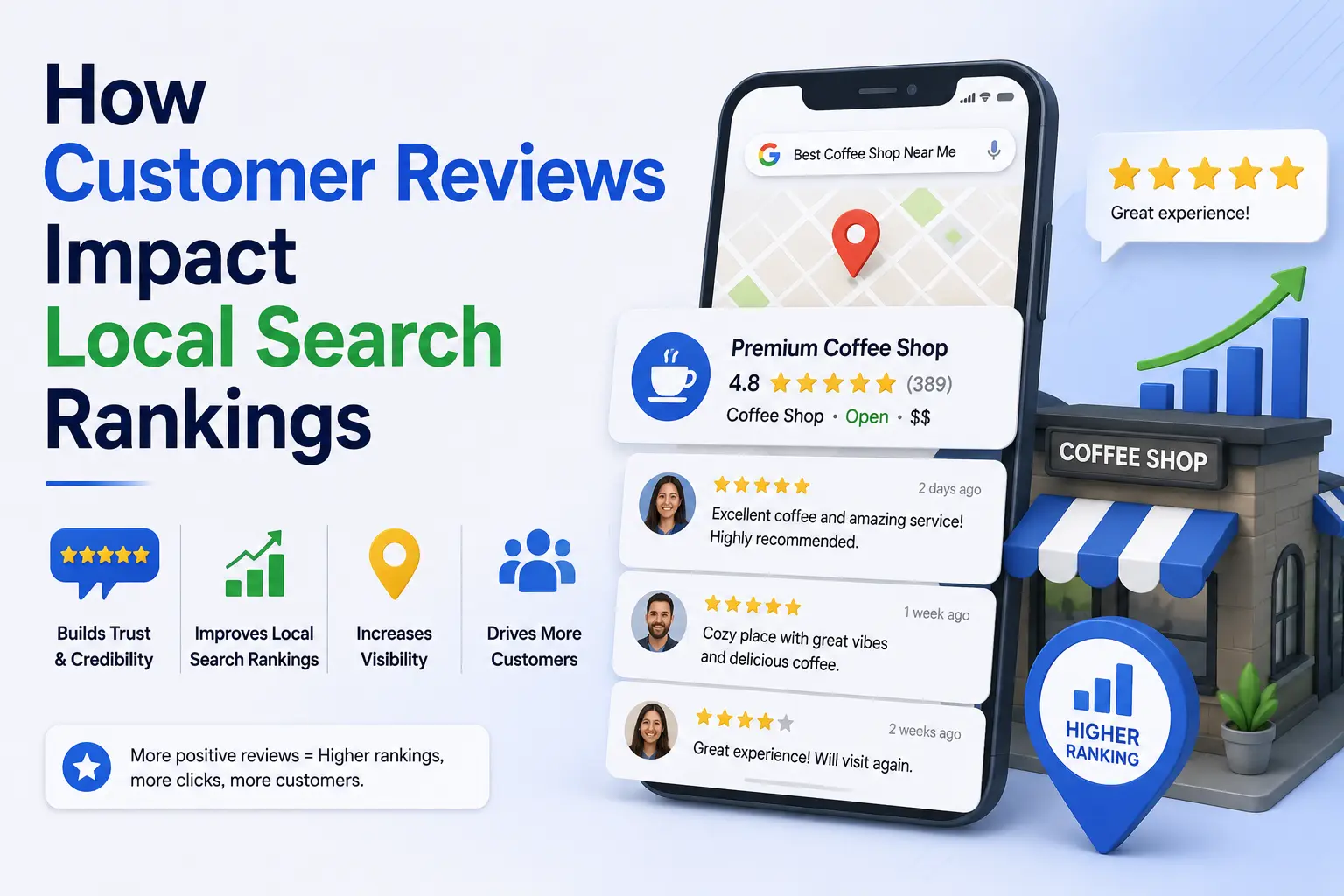
Customer reviews are no longer just digital word-of-mouth; they function as core search infrastructure. In the evolving landscape of local search, search engine algorithms heavily rely on user-generated content to evaluate real-world business credibility.
Understanding how these feedback systems influence search data allows local businesses to optimize their profiles for maximum digital visibility.
The Algorithmic Value of User Feedback
Search engines prioritize user experience by ranking entities that demonstrate exceptional trust and real-time reliability. Reviews provide an unedited stream of public data that algorithms scan to calculate a business’s local prominent status.
-
Prominence Signals: Feedback profiles contribute significantly to a business’s ranking authority within local map packs, serving as algorithmic proof of consumer trust.
-
The Power of Review Velocity: The consistency and speed at which a business acquires new feedback signals ongoing operations. A steady weekly stream outperforms occasional, massive spikes.
-
Recency Weighting: Newer feedback carries the highest influence. Search algorithms degrade the ranking value of older write-ups, viewing profiles without recent activity as potentially dormant.
-
Semantic Data Ingestion: Modern natural language processing engines parse the actual sentences written by consumers to understand the context, specific services, and hidden long-tail intent behind local searches.
Strategic Management for Maximizing Ranking Signals
Transforming consumer feedback into an engine for local search growth requires systemic execution. Businesses must actively cultivate an environment where authentic customer voices naturally enrich their digital entities.
-
Strive for the Realistic Rating Sweet Spot: A perfect five-star score often raises authenticity red flags for both algorithms and consumers. Aiming for a highly credible tier between 4.5 and 4.9 stars maximizes click-through rates.
-
Encourage Detailed, High-Context Contextual Writing: Prompt customers to describe the explicit service they received, the neighborhood where the work occurred, and the precise products utilized.
-
Prioritize Swift and Total Response Rates: Replying to all incoming feedback within a 24-hour window indicates an active, managed digital entity, directly correlating with improved localized impressions.
-
Incorporate Visual Proof: User-uploaded imagery paired with a written experience anchors a profile at the top of relevant sorting filters, as search engines favor rich media assets.
Leveraging Feedback Sentiment for AI and Conversational Search
As search results increasingly shift toward direct AI answers and conversational overviews, user sentiment has become a primary ranking filter. Artificial intelligence engines synthesize massive volumes of community commentary to decide which business safely answers a complex user prompt.
When a consumer searches using conversational language, the system bypasses simple keyword matches to scan local review text for specific real-world references. If your customers frequently detail your prompt service, neighborhood expertise, or specialization, the algorithm uses those direct phrases as dynamic justifications to feature your business above standard web listings.
Conclusion
Local visibility is fundamentally tied to consumer sentiment and engagement cadence. By encouraging detailed consumer insights, maintaining a steady feedback velocity, and executing professional engagement strategies, businesses seamlessly feed local search algorithms the precise signals required for dominant positioning.
Frequently Asked Questions
How many reviews does a local business need to rank in the top map results?
There is no fixed target number, as thresholds depend entirely on local competitor benchmarks. However, achieving an initial baseline of 40 to 50 detailed profiles generally activates stronger prominence signals.
Do negative reviews permanently damage a business’s local search visibility?
No. Occasional negative feedback proves profile authenticity to search engines. Professional, constructive management responses that offer offline resolutions mitigate negative algorithmic impacts while demonstrating business accountability.
Does inserting business keywords into review responses help boost local rankings?
Overloading responses with keywords looks manipulative to modern spam filters. Thoughtful phrases that naturally reference the specific location or exact service add valuable context without triggering optimization penalties.
Are third-party review platforms important for Google local search rankings?
Yes. Search algorithms look for a diverse digital footprint across independent vertical platforms, consumer forums, and mapping systems to verify a brand’s overall authority and presence.
What is the primary indicator that review growth is positively impacting SEO?
Look for upward shifts in actionable metrics within your business profile dashboard, specifically rising trends in direction requests, direct phone calls, website clicks, and local map impressions.