
Smart devices are getting smarter — and the real reason isn’t just better hardware. It’s where data gets processed. Edge computing moves computation away from centralized cloud servers and places it directly on or near the device itself. This fundamental shift is quietly redefining what smart devices can do, how fast they respond, and how safely they handle your data.
What Edge Computing Actually Does Differently
Traditional cloud computing sends device data to remote servers, waits for analysis, then returns a response. That round trip takes time — sometimes enough to matter in critical situations.
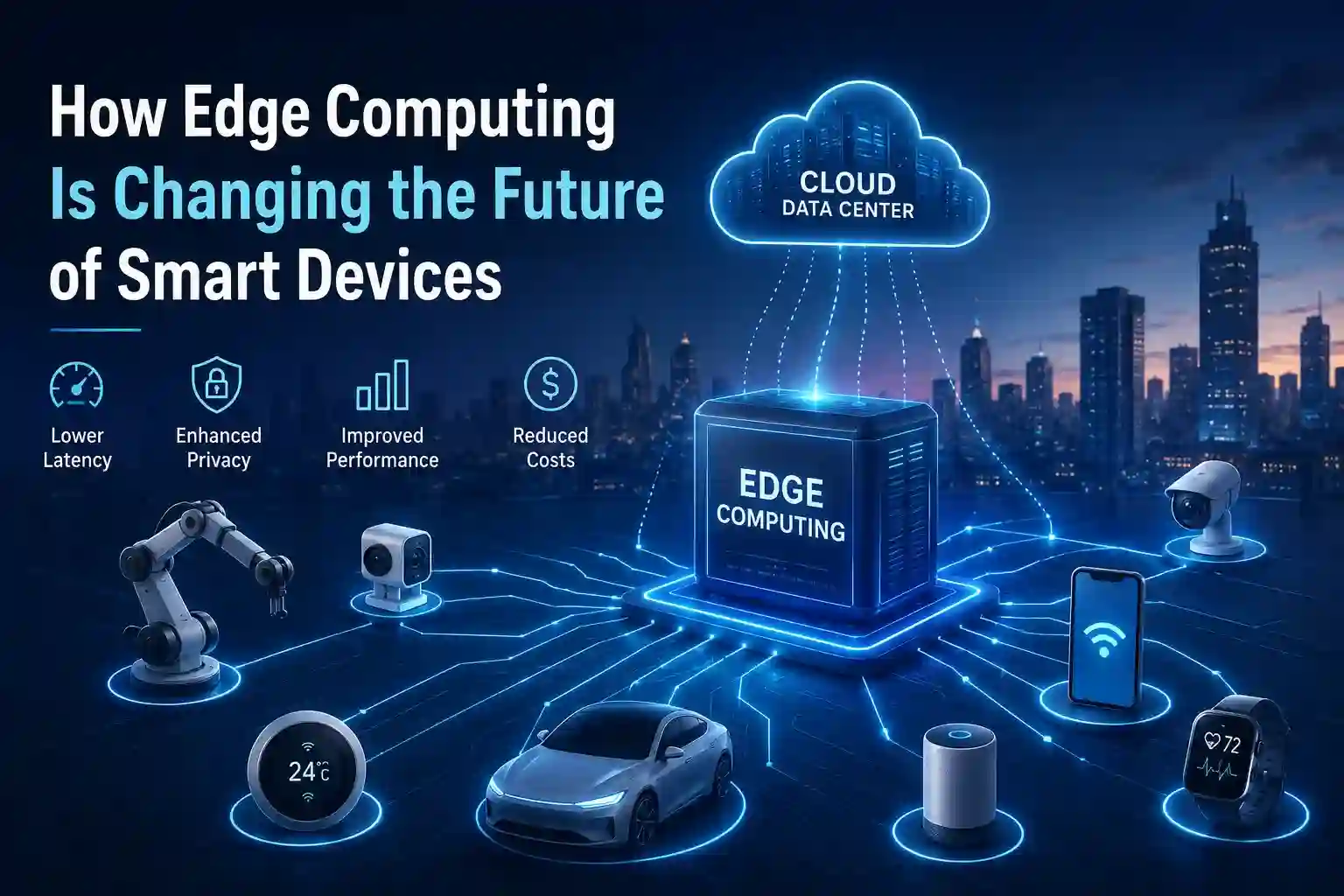
Edge computing eliminates that delay by processing data locally. A smart security camera using edge computing doesn’t need to upload footage to a server to detect motion. It analyzes the frame on-device and acts immediately.
Key capabilities this unlocks:
- Sub-millisecond response times for real-time decisions in autonomous vehicles and industrial sensors
- Offline functionality when internet connectivity drops, keeping critical systems running
- Reduced bandwidth consumption since only relevant data — not raw streams — gets sent upstream
- Localized data handling that limits exposure of sensitive information to external networks
- Distributed resilience so a single server outage doesn’t disable entire device networks
These aren’t incremental improvements. They represent a structural change in how intelligence is delivered to physical devices.
How Smart Devices Are Already Benefiting
The impact of edge computing isn’t theoretical — it’s visible across industries right now.
- Healthcare wearables monitor heart rhythms and detect arrhythmias on-device, alerting users within seconds rather than waiting for cloud confirmation.
- Smart manufacturing equipment uses edge processors to spot defects on assembly lines at speeds no cloud connection could match.
- Autonomous vehicles process sensor data from cameras, radar, and LiDAR locally, making split-second navigation decisions without waiting for remote instructions.
- Smart retail systems analyze foot traffic and inventory changes in real time, adjusting digital displays or triggering restocking alerts instantly.
- Agricultural IoT sensors operate in remote fields with limited connectivity, processing soil and weather data locally to optimize irrigation without relying on constant uptime.
Each of these applications shares a common thread: the need for speed, reliability, or privacy that cloud-only architectures cannot guarantee.
Privacy, Security, and the Edge Advantage
One underappreciated benefit of edge computing is what it prevents from leaving the device in the first place.
When a smart speaker processes your voice command locally, your audio never travels to an external server. When a doorbell camera runs facial detection on-chip, video footage stays on your property. This architecture fundamentally reduces the attack surface for data breaches.
Edge devices also enable more granular security controls. Sensitive computation stays within a trusted local environment, while only anonymized or aggregated results move outward. For industries handling medical records, financial transactions, or personal conversations, this distinction carries legal and ethical weight.
That said, edge computing introduces its own security challenges — each distributed node becomes a potential vulnerability if not properly managed. Firmware updates, physical device security, and authentication protocols all require careful attention as edge deployments scale.
The Road Ahead for Edge-Enabled Devices
The convergence of edge computing with AI is producing a new generation of devices that learn and adapt without continuous cloud dependency. On-device machine learning models now power features like predictive text, real-time translation, and object recognition — all running silently in the background on consumer hardware.
As chip manufacturers build increasingly powerful neural processing units into everyday hardware, the computational gap between edge and cloud continues to narrow. Smartphones, smart TVs, and even household appliances are becoming capable edge nodes in their own right.
The future of smart devices isn’t a battle between edge and cloud — it’s a layered architecture where both work together. Time-sensitive tasks run locally; complex, non-urgent analysis offloads to the cloud. This hybrid approach will define the next decade of connected technology.
Conclusion
Edge computing isn’t just a backend infrastructure trend — it’s actively reshaping what smart devices can accomplish in the real world. Faster response times, stronger privacy protections, and reliable offline performance are no longer premium features. They’re becoming baseline expectations. As edge-capable chips grow more powerful and affordable, the intelligence embedded in everyday devices will continue to expand in ways that make cloud latency feel like a relic of the past.
Frequently Asked Questions
Q1: What is the main difference between edge computing and cloud computing?
Cloud computing processes data on remote centralized servers, which introduces latency. Edge computing processes data on or near the device itself, enabling faster responses and reducing dependence on internet connectivity.
Q2: Which smart devices currently use edge computing?
Devices like smartphones with on-device AI, autonomous vehicles, industrial IoT sensors, modern healthcare wearables, and smart security cameras already leverage edge computing for real-time processing.
Q3: Does edge computing improve smart device privacy?
Yes. By processing sensitive data locally rather than transmitting it to external servers, edge computing reduces the risk of interception and limits the amount of personal information exposed to third-party infrastructure.
Q4: Can smart devices using edge computing still connect to the cloud?
Absolutely. Most implementations use a hybrid model — urgent or sensitive tasks run at the edge, while non-critical analysis, storage, and updates use cloud resources when available.
Q5: What challenges does edge computing introduce for device manufacturers?
Manufacturers must manage distributed security across many physical nodes, ensure consistent firmware updates, handle hardware limitations on processing power, and design systems that degrade gracefully when edge nodes fail or are compromised.