
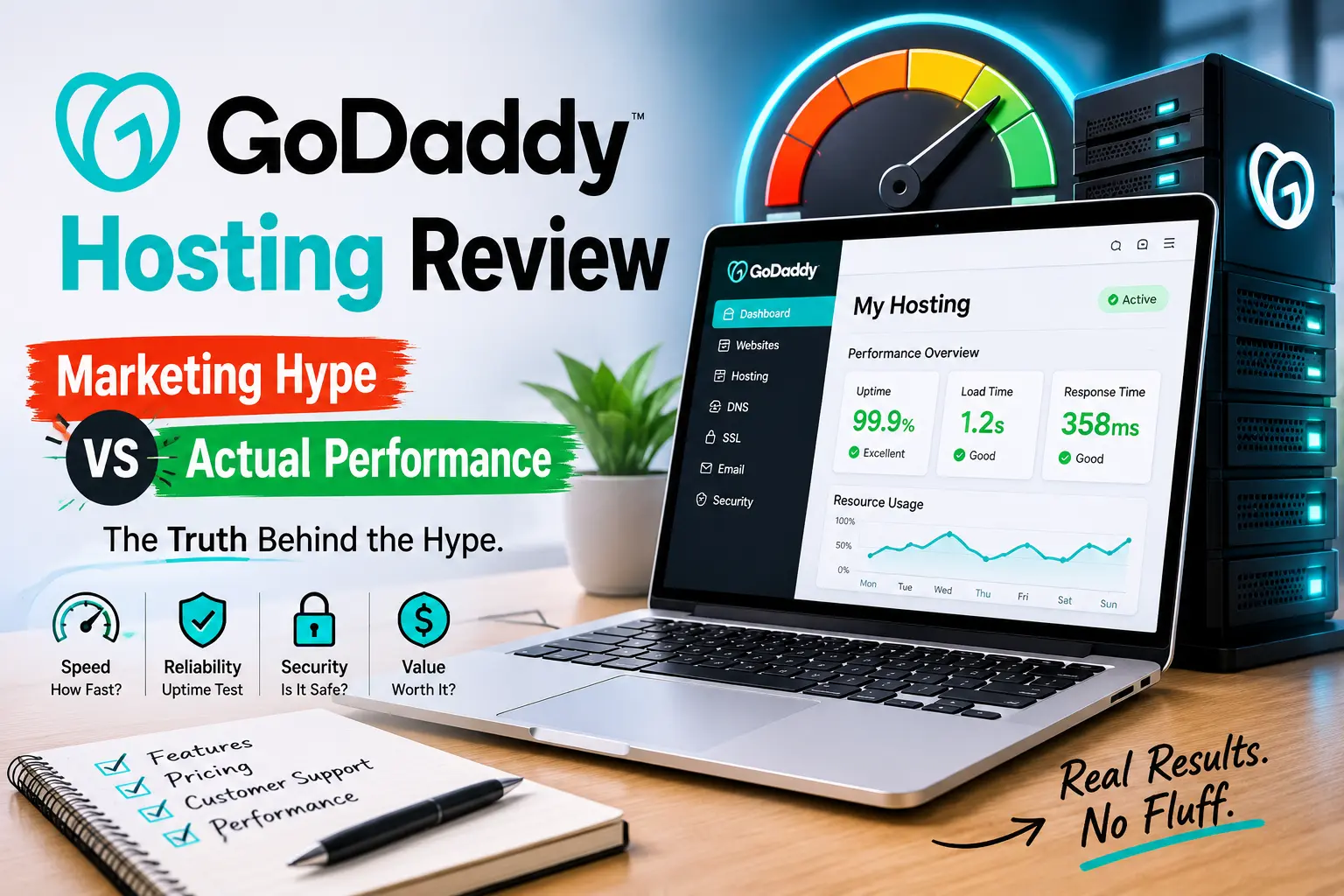
Selecting a web host is a foundational decision for any online venture. Prominent advertising campaigns often make certain providers seem like the natural choice for beginners and established businesses alike. However, heavy marketing investment does not automatically guarantee exceptional server capabilities or seamless user experiences.
Evaluating a hosting provider requires looking past glossy introductory offers to analyze infrastructure stability, real-world loading speeds, and structural value. This technical evaluation balances public messaging against practical server performance metrics to help you determine if this industry giant genuinely fits your website requirements.
Deconstructing the Core Infrastructure and Server Speeds
Promotional materials heavily emphasize global reach and instant setup. To understand what happens after launch, we must look closely at how the entry-level configurations handle real-world traffic demands.
-
Average Page Response Times: While introductory plans easily handle static text, loading speeds can drop noticeability when executing complex script requests or database queries.
-
Server Location Control: Entry-level accounts often face automated server assignments, meaning your data may sit far from your physical target audience unless you opt for premium tiers.
-
Uptime Consistency: Hardware redundancy delivers stable performance during standard hours, but heavy regional traffic spikes can occasionally cause minor response lag.
-
Resource Management Policies: Shared servers enforce strict individual processing limits, meaning a traffic spike on a neighbor’s site can inadvertently throttle your available memory.
-
Integrated Caching Infrastructure: Built-in speed optimization tools exist, but unlocking advanced server-side caching mechanisms typically requires upgrading to higher-tier subscriptions.
Navigating the Financial Lifecycle and Control Panel Usability
The initial onboarding experience feels highly optimized, offering a low barrier to entry. Long-term satisfaction, however, depends heavily on the maintenance experience and renewal billing cycles over subsequent years.
-
Introductory vs. Renewal Price Discrepancies: Low initial signup costs contrast sharply with standard renewal rates, which frequently jump significantly higher upon your first contract expiration.
-
Add-on Services Auditing: Basic packages omit essential features like automated daily backups, web security firewalls, or SSL certificates, requiring separate individual purchases to secure a live site.
-
Control Panel Customization: The customized administrative dashboard prioritizes intuitive visual layouts, though experienced developers may find the streamlined layout restrictive compared to raw cPanel defaults.
-
Domain Connection Friction: Registering a domain name outside the ecosystem introduces minor technical hurdles, creating subtle workflow incentives to keep all digital assets under one roof.
-
Migration Assistance Constraints: Moving an existing website from a competing provider is rarely free on entry plans, requiring manual file transfers or an extra premium service payment.
Assessing Customer Support and Scalability Potential
When technical anomalies arise, the efficiency of your hosting provider’s support team becomes critical. Assistance options include live chat and telephone channels, though wait times show significant variation depending on the hour. General representatives excel at resolving billing inquiries or straightforward domain configuration problems, but addressing deep server-level misconfigurations or security breaches often requires escalating the ticket to higher-tier technical administrators.
Growth potential is another vital factor. Upgrading from basic shared instances to Virtual Private Servers (VPS) or dedicated environments is architecturally straightforward. However, the migration costs and structural configuration requirements at higher levels face stiff competition from specialized cloud-hosting ecosystems. Understanding these backend dynamics allows you to scale confidently as your visitor volume expands.
Conclusion
This hosting alternative provides an accessible entry point for newcomers who value simplified dashboards and aggregated domain management. However, when hidden add-on expenses, steep renewal pricing, and baseline performance throttles are factored in, users prioritizing raw speed and transparent budgeting may find better long-term value elsewhere.
FAQs
Is GoDaddy hosting fast enough for an e-commerce website?
Basic shared plans struggle with resource-heavy e-commerce frameworks like WooCommerce. For smooth transactional checkouts and fast product loading times, you will need to utilize their optimized business or VPS tiers.
Does the free domain offer remain free permanently?
No. The complimentary domain name is only free for the initial year of your contract. Subsequent years renew at standard registration rates, which are typically billed alongside your regular hosting fees.
Can I install WordPress with a single click?
Yes. The platform includes an automated script installer that handles database generation and file deployment, allowing users to launch a clean WordPress installation within a few minutes.
What happens if my website exceeds its monthly resource limits?
If your site consistently overconsumes shared RAM or CPU allocations, the server system will temporarily throttle your speeds or prompt you to upgrade to an isolated premium plan to avoid impacting neighbor sites.
Are email accounts included for free in standard hosting packages?
Standard shared accounts generally bundle a trial version of professional email services. Once this introductory period expires, the mailbox turns into a paid subscription add-on billed per user.