
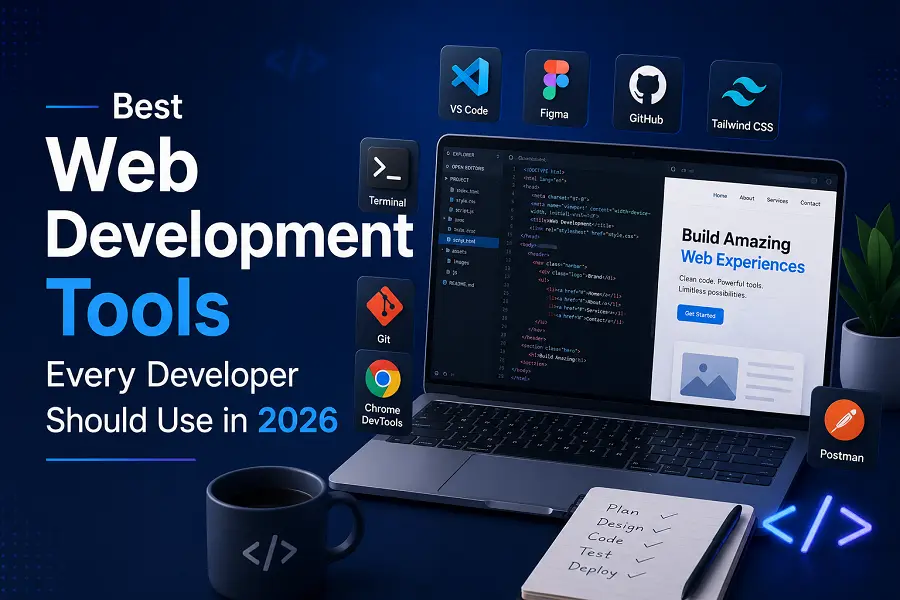
The software engineering ecosystem is moving at unprecedented speeds. Building modern web applications is no longer just about writing code; it centers on orchestrating intelligent systems, optimizing delivery pipelines, and maintaining end-to-end type safety. The current toolset prioritizes deep context awareness and architectural cohesion, allowing engineers to spend less time on mechanical syntax and more time on user experience. Equipping yourself with the right production stack is vital to remaining competitive.
Agentic Editors and AI-Native Integrated Development Environments
The text editor has evolved from a passive syntax highlighter into an active architectural partner. Modern development environments utilize agentic AI models that understand entire local codebases simultaneously rather than analyzing single files in isolation.
-
Full-Context Repository Analysis: Modern IDEs scan peripheral configurations, hidden schemas, and local environment variables to suggest highly accurate architectural fixes.
-
Multi-File Workspace Execution: Developers can issue high-level instructions in natural language to execute sweeping refactoring tasks across dozens of interconnected modules simultaneously.
-
Parallel Sandboxed Debugging: Editors now isolate broken terminal routines automatically, testing autonomous patches inside micro-containers before presenting the solution to the human engineer.
-
Deterministic Tab Completion: Advanced local token prediction reads structural patterns across your historical commits to complete complex boilerplate functions seamlessly.
Meta-Frameworks and Front-End Component Systems
Configuring custom build systems and routers manually has become a legacy approach. The default starting point for contemporary web applications relies on unified frameworks that handle server-side rendering, edge caching, and data syncing natively.
-
Type-Safe Meta-Frameworks: Engineering teams utilize platforms like Next.js and unified stack engines to ensure strict compile-time validation from database queries all the way to client UI elements.
-
Generative Design Engines: Visual interface builders like Vercel v0 convert structural natural language prompts into production-ready React components styled with utility-first CSS.
-
State-Aware Component Libraries: Utility libraries like ShadCN combined with optimized CSS compilation allow developers to build lightweight, accessible interfaces without bulky runtime overhead.
-
Persistent Location Routers: Modern client-side navigation tools preserve accurate page caching and scrolling contexts automatically, eliminating layout shifts during intricate data revalidation cycles.
Next-Generation Automation and Testing Infrastructure
Shipping software with absolute confidence requires robust automated validation. The tools handling deployment pipelines and end-to-end browser testing have evolved to eliminate environmental discrepancies completely.
Traditional browser automation has been replaced by platforms like Playwright, which offer native cross-browser verification with minimal test fragility. When paired with machine learning agents, these testing frameworks run user flows, capture screenshots, and spot visual regression bugs automatically during continuous integration cycles. Furthermore, cloud-native deployment platforms manage production scaling autonomously. By connecting your Git repository directly to agentic hosting layers, the software automatically provisions infrastructure, manages certificates, and handles auto-scaling parameters without manual DevOps intervention.
Conclusion
The top web development utilities are designed to remove friction from the creative process. By embracing agentic editors for deep logic generation, utilizing cohesive meta-frameworks for front-end architecture, and automating your testing pipelines, you maximize engineering velocity. Elevating your tech stack ensures your applications remain performant, secure, and ready for future scale.
FAQs
What makes an editor AI-native compared to one using standard extensions?
AI-native editors are built from the ground up to parse entire code repositories simultaneously, allowing them to perform complex, multi-file code modifications that standard autocomplete extensions cannot handle.
Why are utility-first CSS engines still preferred for modern component design?
They offer unmatched compilation speed and eliminate bloated style sheets, allowing visual generation tools to output clean, highly performant code that is easy for developers to read and modify.
How do modern meta-frameworks improve initial page load times?
They prioritize server-first rendering and automatically split code bundles, ensuring that browsers only download the precise amount of JavaScript necessary for immediate page interactivity.
Can automated cloud platforms replace the need for dedicated DevOps engineers?
For startups and mid-sized applications, yes. They automate infrastructure setup, domain routing, and scaling, though complex enterprise architectures still benefit from human oversight.
Is TypeScript necessary when using automated development tools?
Yes, type safety provides explicit structural guardrails that help automated systems understand your code logic perfectly, minimizing generated bugs and invalid syntax suggestions.