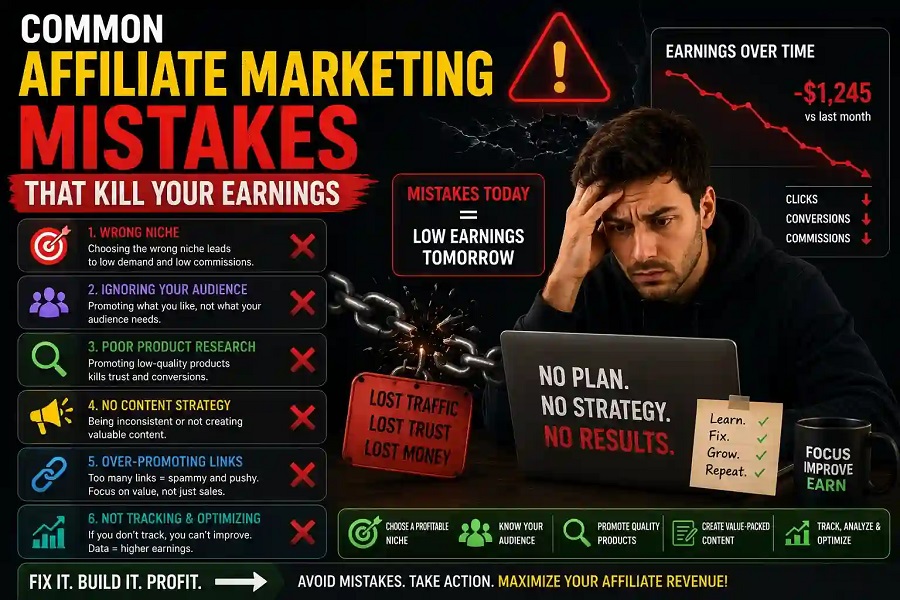

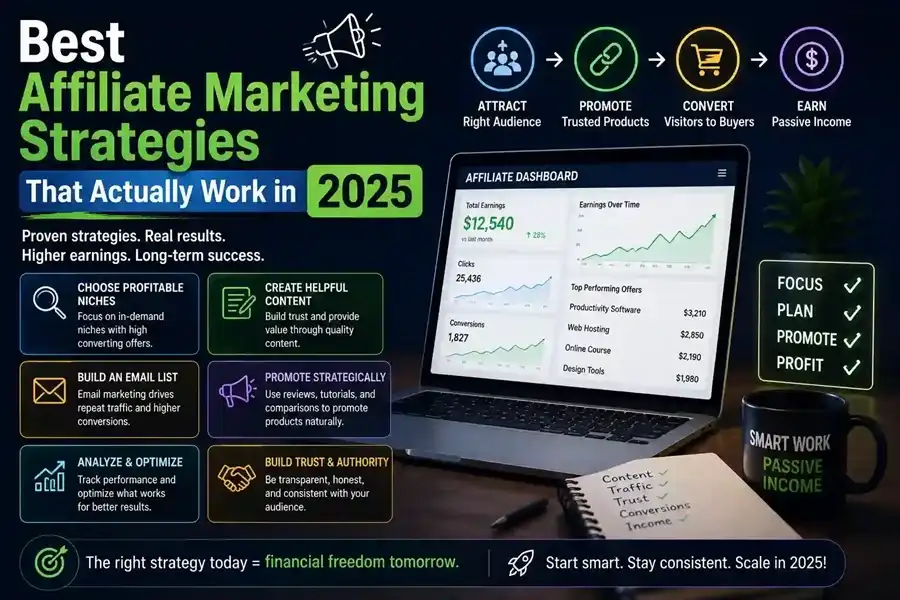
Affiliate marketing has matured. The tactics that generated commissions five years ago — thin review pages, generic product roundups, and keyword-stuffed content — no longer hold up against smarter algorithms, more skeptical buyers, and a competitive landscape full of publishers chasing the same programs.
What works in 2025 is built on a different foundation: genuine expertise, strategic content architecture, diversified traffic, and audience trust earned over time rather than manufactured quickly.
These strategies reflect that shift.
Content Strategies That Build Authority and Drive Affiliate Conversions
Content remains the primary vehicle for affiliate income — but the type of content that converts has changed considerably. Shallow coverage of popular products no longer ranks, and even when it does, increasingly informed readers don’t trust it.
The affiliate publishers generating consistent income in 2025 approach content differently.
- Experience-based reviews — First-hand usage documentation with specific observations, measurable outcomes, and honest assessments of limitations outperforms aggregated opinion pieces in both rankings and conversion rates
- Comparison content targeting decision-stage queries — Buyers searching “Product A versus Product B” have already moved past research into evaluation. Content that addresses this specific intent with honest, detailed comparison converts at significantly higher rates than general awareness content
- Problem-first content architecture — Building content around the problem a product solves rather than the product itself captures readers earlier in the decision journey and positions the recommendation as a logical conclusion rather than an obvious sales pitch
- Long-form buying guides in narrow niches — Comprehensive guides covering a specific product category in genuine depth establish topical authority that search algorithms reward with sustained rankings across multiple related queries
- Video and written content integration — Embedding original video demonstrations within written content increases time on page, builds trust through visual proof, and creates an additional discovery channel through video search independently
- Updated content calendars — Systematically refreshing older affiliate content with current pricing, new product alternatives, and updated user experience observations maintains rankings that would otherwise decay as competitors publish newer material
The underlying principle across all of these is that the content must provide real value to someone who hasn’t decided to buy yet — not just to someone already looking for a purchase link.
Traffic Diversification Strategies That Protect Affiliate Income
Affiliate businesses built on a single traffic source carry significant structural risk. Algorithm updates, platform policy changes, and ad cost inflation have ended income streams that appeared stable for years.
Sustainable affiliate income in 2025 comes from layered traffic architecture.
- Organic search as the foundation — SEO-driven traffic remains the highest-converting and most cost-efficient channel for affiliate content. Targeting buyer-intent keywords with depth and specificity builds compounding visibility that paid channels can’t replicate economically
- Email list development as a retention layer — An owned email audience receives recommendations directly, independent of platform changes. Segmented lists that receive relevant product recommendations based on demonstrated interests convert at rates that cold traffic never reaches
- YouTube as a discovery and trust channel — Video content builds personal connection that written content rarely achieves. Affiliate links in video descriptions and pinned comments convert audiences who trust the creator’s demonstrated expertise
- Pinterest for evergreen visual niches — Home, fashion, food, travel, and lifestyle affiliate content distributed through Pinterest generates sustained referral traffic that behaves similarly to search traffic in its longevity and intent quality
- Community participation in relevant forums and groups — Genuine contribution in spaces where target audiences gather builds authority and drives referral traffic that arrives with pre-existing trust — the highest-converting traffic state possible
- Strategic paid promotion of proven organic content — Rather than running cold paid traffic to affiliate content, amplifying pieces already proven to convert organically with modest paid budgets extends reach without the risk of spending on unvalidated content
Each channel serves a different function. SEO builds the base. Email retains and converts. Video builds trust. Community participation generates high-intent referrals. Together they create an affiliate business that doesn’t collapse when any single source changes.
Program Selection and Commission Structure Strategies
Traffic and content mean nothing if the programs selected don’t match audience intent or offer sustainable commission economics. Program selection is where many affiliate publishers leave significant income unrealized.
High-ticket affiliate programs — software subscriptions, financial products, professional services, and premium physical goods — generate meaningful income from relatively modest conversion volume. A single commission from a well-matched high-ticket recommendation can exceed an entire month of income from a high-volume low-commission program.
Recurring commission programs deserve prioritization over one-time payment structures wherever the product category allows. Software tools, membership platforms, and subscription services that pay monthly commissions for the lifetime of referred customers create compounding income that grows without proportional additional content effort.
Exclusivity and early partnership with emerging programs in growing niches provides first-mover advantage before competition drives down commission rates and saturates content opportunities. Monitoring new program launches in adjacent categories to an existing niche creates opportunities that established publishers are slower to identify.
Diversifying across multiple programs within a niche prevents the income disruption that occurs when a single program changes commission rates, closes its affiliate program, or exits the market entirely.
The Affiliate Publishers Winning in 2025 Play a Longer Game
The affiliate marketing landscape has self-selected toward quality. Publishers willing to build genuine expertise, invest in real content, and cultivate audience trust over months rather than weeks are capturing the income that shortcut-focused approaches are losing.
The strategies above require more patience than mass-publishing thin content or running arbitrage ads. They also build something that lasts — income that grows from a foundation of real value delivered to a real audience that returns because the recommendations proved trustworthy.
That’s not a new idea. It’s just the one that has always worked — and that the current environment rewards more than ever.
Frequently Asked Questions
Q: How long does it take to earn consistent affiliate income using these strategies?
Most affiliates building through SEO and content see meaningful commission income between six and twelve months of consistent publishing. Email and community channels can produce results faster but require audience building that also takes time to compound.
Q: Do I need a large audience to succeed with affiliate marketing in 2025?
No. A small, highly engaged audience in a specific niche consistently outperforms a large general audience for affiliate conversions. Trust and relevance matter more than follower count or raw traffic volume.
Q: Is affiliate marketing still profitable in 2025 with so much competition?
Yes — in niches where genuine expertise produces content that shallow competitors can’t replicate. Competition is heavy in general categories but remains manageable in specific sub-niches where real product knowledge creates a meaningful quality gap.
Q: What is the biggest mistake affiliate marketers make with program selection?
Chasing high commission percentages without evaluating whether the product matches the audience’s actual needs. A 50% commission on a product the audience doesn’t want converts at near-zero rates. Relevance and audience fit consistently outperform commission rate as a selection criterion.
Q: Should beginner affiliate marketers focus on one niche or multiple simultaneously?
One niche, built deeply, before expanding. Topical authority in search algorithms rewards focused coverage of a subject area. Publishers who scatter effort across unrelated niches build shallow authority in each, which underperforms focused competitors in both rankings and audience trust.