
Dedicated reading hardware occupies a unique space in modern personal technology. While smartphones and tablets demand continuous attention with multi-app notifications and vibrant OLED panels, e-readers focus entirely on visual comfort and minimal distraction. Amazon has dominated this market segment for nearly two decades, iteratively refining its hardware and e-paper screens.
The current digital reading ecosystem presents greater competition than ever before. Alternative platforms offer flexible operating systems, open-source file compatibility, and distinct physical button arrays. This comprehensive evaluation looks at the modern Kindle platform to determine if the hardware retains its crown for daily reading habits.
Technological Benchmarks of the Modern Lineup
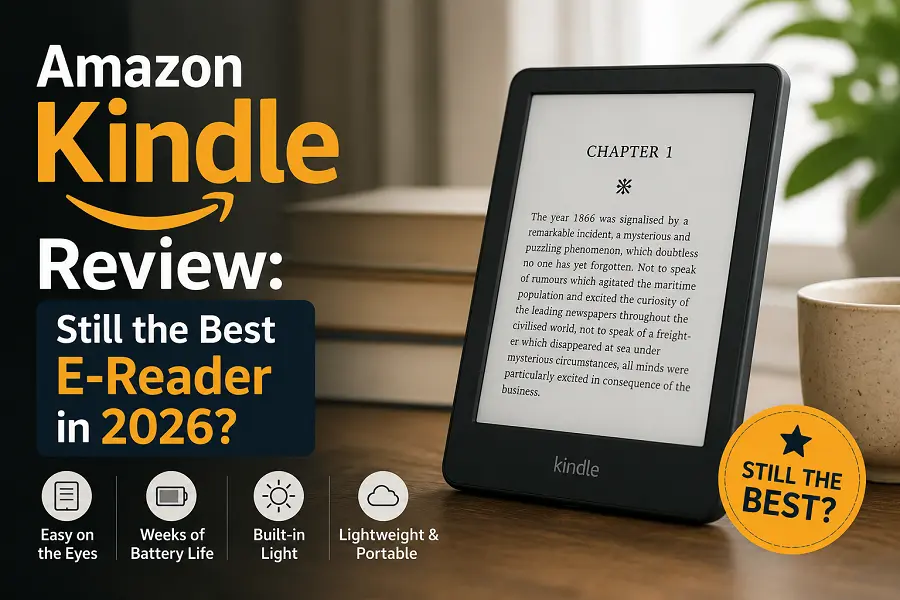
The electronic ink ecosystem has shifted beyond basic monochrome panels. Current Kindle hardware features performance modifications designed to bridge the gap between digital text and physical book pages.
-
Oxide Thin-Film Transistor Displays: The latest screen implementations leverage advanced oxide backplanes to achieve a highly defined contrast ratio, making text appear crisper against the background.
-
Accelerated Refresh Rates: Structural display optimizations allow for roughly 25% faster page turns, eliminating the jarring visual ghosting that characterized older e-paper generations.
-
Colorsoft E-Ink Integration: Premium models introduce specialized color layers, enabling the display of rich book covers, graphic novels, and multi-colored highlights without sacrificing eye comfort.
-
Intelligent Lighting Arrays: Integrated front lights shift seamlessly from crisp white to a deep amber hue, reducing sleep-disrupting blue light exposure during nighttime reading sessions.
-
Resilient Waterproof Engineering: IPX8-rated chassis protection ensures functional security against accidental submersion in fresh water, a crucial requirement for reading by pools or in bathtubs.
Real-World Performance Across Varying Environments
Using a dedicated e-reader changes how one consumes literature over long periods. The physical architecture and ecosystem design directly influence daily reading stamina and portable convenience.
-
Sunlight Visibility and Ergonomics: Standard tablet screens wash out entirely under direct afternoon sunlight due to heavy glare. The matte, textured surface of the Kindle diffuses external light reflections, maintaining complete legibility even in outdoor settings.
-
Extended Battery Durability: Instead of measuring power usage in hours, the low-energy consumption of e-paper allows a single charge to sustain operations for up to twelve weeks, depending on wireless connectivity.
-
Physical Portability Choices: The streamlined base model features an incredibly light, 6-inch frame that fits into jacket pockets easily. Meanwhile, the mid-tier options step up to a spacious 7-inch workspace that mimics standard paperback dimensions.
-
Expansive Storage Capacity: Base configurations start at 16GB of onboard storage, which easily holds thousands of standard digital books, while upgraded tiers expand to 32GB to accommodate audiobooks and graphic novels.
Ecosystem Constraints and Alternative Platforms
No single electronic device satisfies every user preference perfectly. The Kindle hardware remains fundamentally tied to a closed ecosystem, which introduces specific compromises for certain readers.
The interface prioritizes content acquired directly through the integrated bookstore, creating a walled-garden experience. While document conversion tools allow users to send independent files to their devices, individuals with large personal libraries in open formats often find the file ingestion process rigid.
Furthermore, the design philosophy strictly prioritizes touch-based navigation. The omission of physical side buttons for page-turning on core models frustrates purists who prefer tactile, mechanical feedback over swiping a screen. Finally, the specialized screen overlay required for color rendering models naturally creates a slightly softer appearance on black-and-white text compared to traditional monochrome versions.
Conclusion
The Amazon Kindle lineup remains the most reliable and cohesive e-reader choice for the vast majority of consumers. Exceptional battery longevity, rapid page responsiveness, and superb contrast ratios make long-form digital reading effortless. While open-system competitors offer more freedom for file customization, the Kindle platform balances hardware refinement and convenience perfectly for standard bookworms.
FAQs
Can I read library books on a Kindle device?
Yes, the ecosystem supports borrowing digital titles from local libraries using integrated secondary borrowing applications, provided the regional library system has established compatibility.
Is the display safe for children’s eyes?
Yes, the front-lit e-paper display does not shine light directly into the eyes like an LCD screen. Instead, it reflects light across the screen surface, mimicking natural paper to reduce visual fatigue.
Can I listen to audiobooks on these devices?
Yes, modern models include Bluetooth audio connectivity, allowing users to pair wireless headphones or speakers to stream audible narration seamlessly.
How do lock-screen advertisements function?
Lower-priced base tiers include curated book recommendations on the sleep screen. Users can choose to pay a one-time fee during or after purchase to remove these advertisements entirely.
Is it possible to organize books into custom collections?
Yes, the on-device software allows readers to build specific folders and categorized collections to organize expansive text libraries by genre, author, or reading priority.