
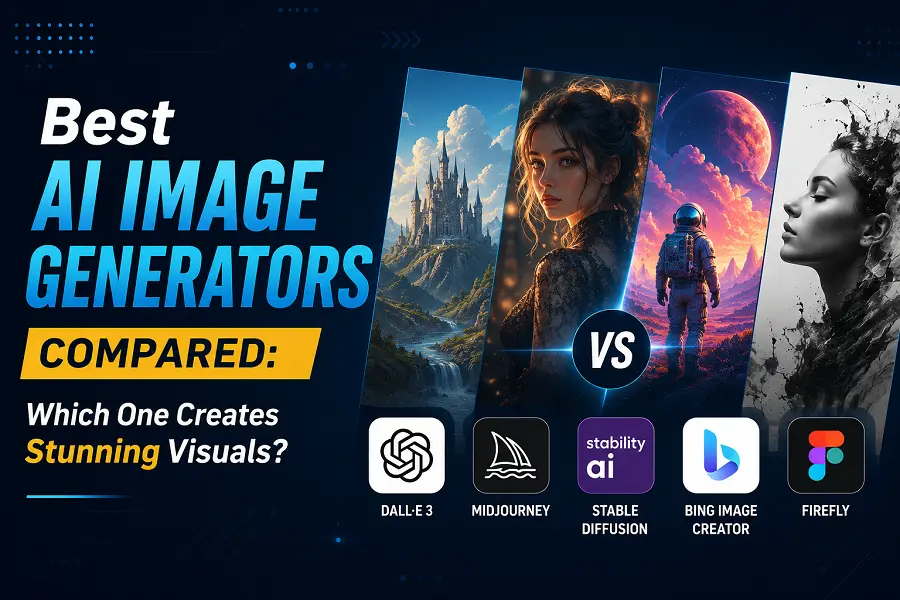
Selecting an artificial intelligence image generator requires understanding how different rendering engines interpret text prompts. The market has shifted away from a single, dominant tool toward highly specialized platforms. The optimal choice depends entirely on whether a project demands photorealism, artistic styling, precise text rendering, or deep control over composition.
Defining the Core Strengths of Leading Generators
Different processing models excel at distinct visual disciplines based on their underlying architecture and training methods.
-
Aesthetic and Cinematic Depth: Midjourney focuses heavily on composition, lighting, and artistic execution, delivering gallery-quality results with minimal guidance.
-
Semantic Accuracy and Text Integration: OpenAI’s DALL-E 3 translates complex, literal instructions into graphics while maintaining legible, correctly spelled text overlays.
-
Hyper-Photorealism and Open-Source Control: The Flux model family delivers unmatched skin textures, anatomical accuracy, and architectural realism with high rendering speeds.
-
Ecosystem Utility and Multi-Modal Editing: Google’s Imagen engine provides rapid iterations and precise product-focused layouts directly within cloud workflows.
Evaluating Visual Performance Across Key Industries
Matching a platform’s specific engineering strengths with your actual production goals ensures professional-grade visual assets.
1. High-End Editorial Art and Creative Directing
When project briefs demand dramatic mood boards, concept art, or distinct illustration styles, visual flair is essential. Midjourney handles deep artistic vocabulary effortlessly, accurately mimicking specific paint textures, film stocks, and historical design movements. It emphasizes rich contrast and depth of field, giving everyday graphics a high-budget, cinematic finish.
2. Marketing Collateral and Graphic Layouts
Graphic design projects frequently require the seamless blend of imagery and readable typefaces. DALL-E 3 follows intricate spatial instructions perfectly, placing objects exactly where specified in a prompt. It excels at producing clear labels, book covers, and promotional banners, vastly reducing the time spent fixing scrambled text in external editing software.
3. Commercial Photography and Realistic Mockups
E-commerce and product design require hyper-realistic visuals that look authentic rather than digitally synthesized. Flux leads the industry in rendering physical textures, handling intricate details like hair, clothing fabric, and natural lighting reflections flawlessly. Its open-source flexibility allows studios to run the tool locally for complete data privacy.
Strategic Guidance for Production Workflows
Maximizing creative output requires deploying the correct rendering tool for specific commercial tasks.
When to Utilize Midjourney
-
Developing atmospheric concept art or stylized character designs for entertainment media.
-
Creating scroll-stopping social media graphics that require immediate visual engagement.
-
Executing abstract design ideas where artistic composition matters more than literal prompt matching.
When to Open DALL-E 3
-
Crafting complex diagrams or educational materials that require precise object counts.
-
Generating ad mockups containing integrated slogans, brand names, or specific signboards.
-
Running rapid, conversational design iterations directly inside a chat interface without deep technical knowledge.
When to Choose Flux
-
Producing high-resolution portrait photography or realistic human hands and anatomy.
-
Scaling mass visual content pipelines via dedicated application programming interfaces.
-
Running custom-trained style models locally on independent hardware setups.
Conclusion
No single AI image generator satisfies every professional requirement simultaneously. Midjourney remains the premier option for dramatic, high-aesthetic styling and artistic creative direction. DALL-E 3 provides the most reliable experience for strict instruction following, concept visualization, and in-graphic text generation. Flux delivers the definitive standard for true hyper-photorealism and granular pipeline customization. Aligning your platform choice with your primary production bottleneck guarantees superior results.
Frequently Asked Questions
Which AI generator creates the most realistic human photos?
The Flux model family delivers the highest level of photorealism, specifically outperforming competitors in rendering natural skin pores, complex hand structures, and authentic environmental lighting.
Can these tools generate perfectly readable text inside images?
DALL-E 3 and the latest Imagen iterations handle typography with high precision. They reliably spell short phrases, labels, and brand titles correctly within the initial generation.
Do I own the commercial rights to the graphics I generate?
Most major platforms grant full commercial utility rights to paying subscribers. However, enterprise revenue thresholds can apply to certain tools, so reviewing individual service agreements for your business size is recommended.
Why does Midjourney sometimes ignore specific parts of a prompt?
Midjourney prioritizes overall aesthetic quality and artistic composition over literal compliance. For strict adherence to complex, multi-object instructions, a conversationally integrated tool like DALL-E 3 is more dependable.
Is it necessary to pay for multiple image subscriptions?
Most creative professionals find that a combination of two tools—one optimized for artistic style and another for literal utility—covers the entire spectrum of commercial production needs.