
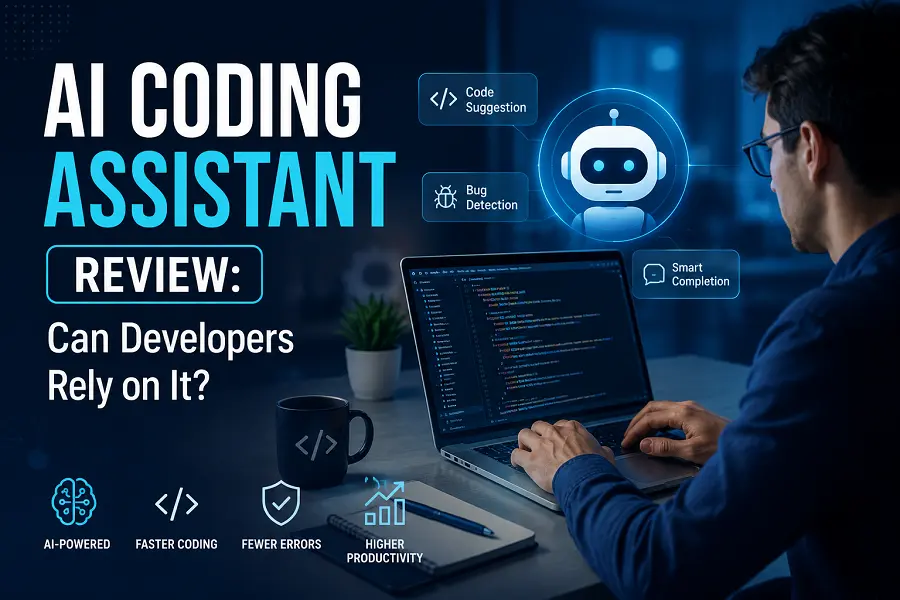
The integration of artificial intelligence into software development environments has evolved far beyond basic autocomplete text suggestions. Modern engineering teams regularly deploy autonomous terminal agents, multi-file editing engines, and conversational code interpreters to accelerate deployment cycles. Yet, a widening gap exists between the rapid adoption of these platforms and a software engineer’s actual trust in their output. Determining whether developers can truly rely on these virtual assistants requires an objective look at their architectural limits and system logic.
The Architectural Mechanics of Modern Dev Assistants
Different software development engines utilize distinct structural paradigms to process repositories and suggest functional code blocks.
-
Context-Aware IDE Ingestion: Rebuilt native code environments parse the relationships between separate modules, indexing entire local directory trees to ensure suggestions align with your project architecture.
-
Agentic Terminal Execution: Command-line interfaces operate directly inside local file structures to modify dependencies, execute command shells, and run debugging test suites autonomously.
-
Probabilistic Text Evaluation: Neural networks evaluate language patterns structurally to predict code sequences, synthesizing boilerplate configurations at speeds no human programmer can match.
-
Local, Privacy-First Isolation: Enterprise-grade security modules execute locally on isolated hardware setups, ensuring proprietary corporate algorithms never exit internal networks.
Evaluating Engineering Reliability Across Major Pipelines
Relying on machine automation requires matching a tool’s core logic with the explicit operational constraints of your software project.
1. Generating Repetitive Boilerplate and Basic Refactoring
When handling predictable foundational tasks like writing standard API routes, drafting mock datasets, or converting legacy script syntax, automation engines deliver exceptional utility. Tools like GitHub Copilot interpret architectural frameworks instantly, saving engineers hours of manual keyboard entry. Because these baseline assets utilize common, well-documented programming patterns, the likelihood of compiling invalid syntax remains remarkably low.
2. Deep Structural Reasoning and Multi-File Architecture
As systems expand into complex microservice models with intricate dependencies, traditional code prediction often encounters critical bottlenecks. This is where advanced context-driven systems like Cursor and Claude Code hold a distinct technical edge. They plan multi-file edits in parallel, tracking changes across multiple directories simultaneously. However, they can still introduce subtle architectural drift if a project structure lacks a well-defined human design framework.
3. Factual Authenticity and the Risk of Silent Vulnerabilities
The greatest barrier to complete reliance on these platforms is the occurrence of confidently generated errors, obsolete method references, or missing security validations. Because these systems function on probabilistic pattern matching rather than deterministic logic, they can invent nonexistent software parameters or suggest deprecated libraries. If a development team merges these snippets without rigid code reviews, they risk introducing quiet performance leaks or severe security flaws directly into the production codebase.
Strategic Governance: Calibrating the Human-AI Dev Loop
Maximizing system velocity while maintaining software stability requires treating automated assistants as high-speed operational extensions rather than flawless technical authorities.
When to Trust AI Code Generation Instantly
-
Scaffolding routine template configurations, basic styling components, or unit test setups.
-
Translating small, self-contained functional logic from one language syntax directly to another.
-
Querying broad technical concepts, documentation references, or standard script configurations.
When to Enforce Strict Human Oversight and Review
-
Designing complex database relationships, sensitive payment flows, or system permissions.
-
Implementing security controls, payload encryption models, or private user data validations.
-
Deploying large-scale refactors to legacy systems that lack a complete suite of automated integration tests.
Conclusion
Developers cannot blindly rely on AI coding assistants as standalone engineering solutions; instead, they must treat them as highly capable but error-prone programming partners. These platforms excel at eliminating repetitive tasks, streamlining documentation analysis, and mapping initial project frameworks within seconds. However, human engineers remain absolutely essential for structural verification, systems architecture planning, and rigorous security gatekeeping. Merging high-speed generation engines with deliberate, human-led verification forms the baseline for secure modern software development.
Frequently Asked Questions
Why do coding assistants sometimes suggest outdated or broken code?
These systems generate recommendations based on historical patterns within their training data. If an external framework or programming library undergoes a sudden major version update, the assistant may continue outputting deprecated syntax until its context is refreshed.
Is it safe to use public coding tools with proprietary source code?
Standard consumer tools frequently log user inputs to train future models, which can create data compliance risks for businesses. Enterprise environments should utilize dedicated privacy-focused systems that promise zero data retention.
Can an AI assistant fully debug a complex, multi-layered application crash?
Modern agentic environments can read local stack traces, inspect relevant source files, and attempt multi-step fixes. However, tracking down deep runtime anomalies across microservices still requires expert human analytical skills.
Do these automated code builders reduce the value of learning to code?
Not at all. Because automated platforms frequently generate non-functional or unoptimized code, engineers need a profound understanding of foundational computer science principles to effectively audit, fix, and maintain the generated logic.
How should software engineering teams track AI-generated code?
Organizations maintain code safety by embedding automated tagging scripts within their code repositories or requiring explicit documentation notes inside team pull requests. This ensures every automated asset undergo targeted testing before release.