
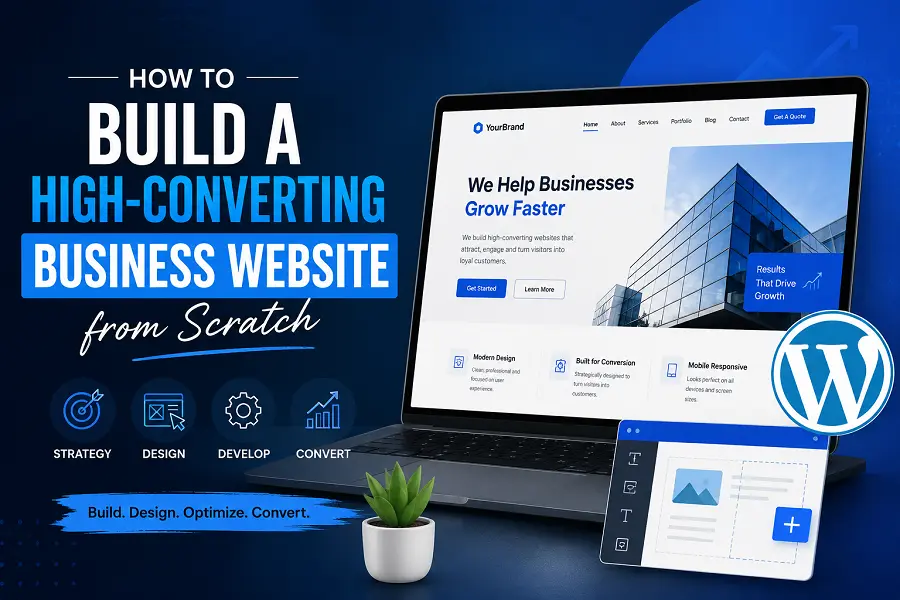
A corporate website serves as the ultimate digital storefront. However, simply maintaining an online presence is no longer sufficient to capture market share. To transform casual visitors into paying customers, a website must blend intuitive user psychology with technical precision. Building a high-converting platform requires moving away from purely aesthetic templates and focusing on structured information architecture, clear communication pipelines, and invisible technical optimizations.
Aligning Information Architecture with User Intent
The structure of a digital interface dictates how easily a potential customer can evaluate your services. Information architecture must map cleanly to the natural decision-making process of a human browser. When a user arrives, they should immediately understand what you offer, how it solves their specific friction, and what step to take next without excessive scrolling.
-
Intent-Based URL Mapping: Organize primary service pages logically so both search crawlers and human readers can navigate the site structure within two clicks.
-
F-Shaped Text Hierarchies: Place critical value propositions and core brand offerings along natural visual scanning paths where horizontal eye movements are strongest.
-
Contextual Internal Linking: Guide users smoothly from educational blog resources to deeply optimized transactional landing pages using logical anchor text links.
-
Segmented Navigation Layouts: Group top-tier menu items by target audience personas or explicit product categories to prevent cognitive overload.
Designing Frictionless Conversion Pathways
Converting a passive browser into an active lead requires minimizing the mental and physical effort required to complete an action. Complex forms, ambiguous messaging, and poorly placed interactive elements cause immediate user drop-offs.
-
Deploy Intent-Matched Call-to-Actions (CTAs): Use high-contrast buttons featuring descriptive action words tailored to reader readiness, avoiding vague phrases like “Submit.”
-
Streamline Input Forms: Restrict contact and checkout fields to absolute essentials, utilizing inline validation to fix formatting errors instantly.
-
Embed Ubiquitous Trust Indicators: Position authentic customer testimonials, industry certifications, and secure payment badges directly adjacent to form fields.
-
Incorporate Objection-Handling FAQs: Place clear, concise answers to common pricing or implementation hurdles immediately below primary conversion sections.
Mastering the Technical Performance Foundation
Even the most persuasive copywriting and beautiful layouts fail if the underlying technical infrastructure is sluggish or unoptimized. Speed, responsiveness, and interactivity are the pillars of modern digital trust.
Modern web browsing occurs predominantly on mobile devices under varying network conditions. Ensuring that your layout shifts fluidly across different screen sizes is just the starting point. Behind the scenes, developers must prioritize clean code compilation and asset management. Compressing visual files into modern lightweight formats, leveraging edge computing, and deferring non-essential scripts prevent rendering delays. A platform that responds instantly to user inputs builds subconscious credibility and reduces bounce rates significantly.
Conclusion
Building a high-converting website from scratch requires a balanced focus on human psychology and development standards. By structuring layouts around user intent, eliminating form friction, and maintaining a lightning-fast technical foundation, businesses create an asset that converts traffic predictably. Continual refinement based on actual user interaction metrics ensures the platform remains a highly effective growth tool.
FAQs
What is the ideal loading time for a high-converting business website?
A business website should achieve a structural loading speed of under 2.5 seconds to minimize user abandonment and ensure a seamless browsing experience.
How many custom forms should be included on a single landing page?
Stick to one primary form tailored to the main goal of that specific page to avoid distracting the visitor and diluting the conversion rate.
Why do value-focused headlines convert better than creative taglines?
Clear, benefit-focused headlines tell visitors exactly how a service fixes their specific problem within seconds, whereas clever taglines often cause confusion.
How should social proof be displayed for maximum conversion impact?
Showcase specific, results-oriented reviews that feature real names, photos, or corporate logos, placing them close to your decision-making areas or checkout paths.
Does mobile optimization simply mean resizing a desktop layout?
No, true mobile optimization involves adjusting touch-button sizes, simplifying navigation menus, and modifying asset loading sequences specifically for handheld usage.