

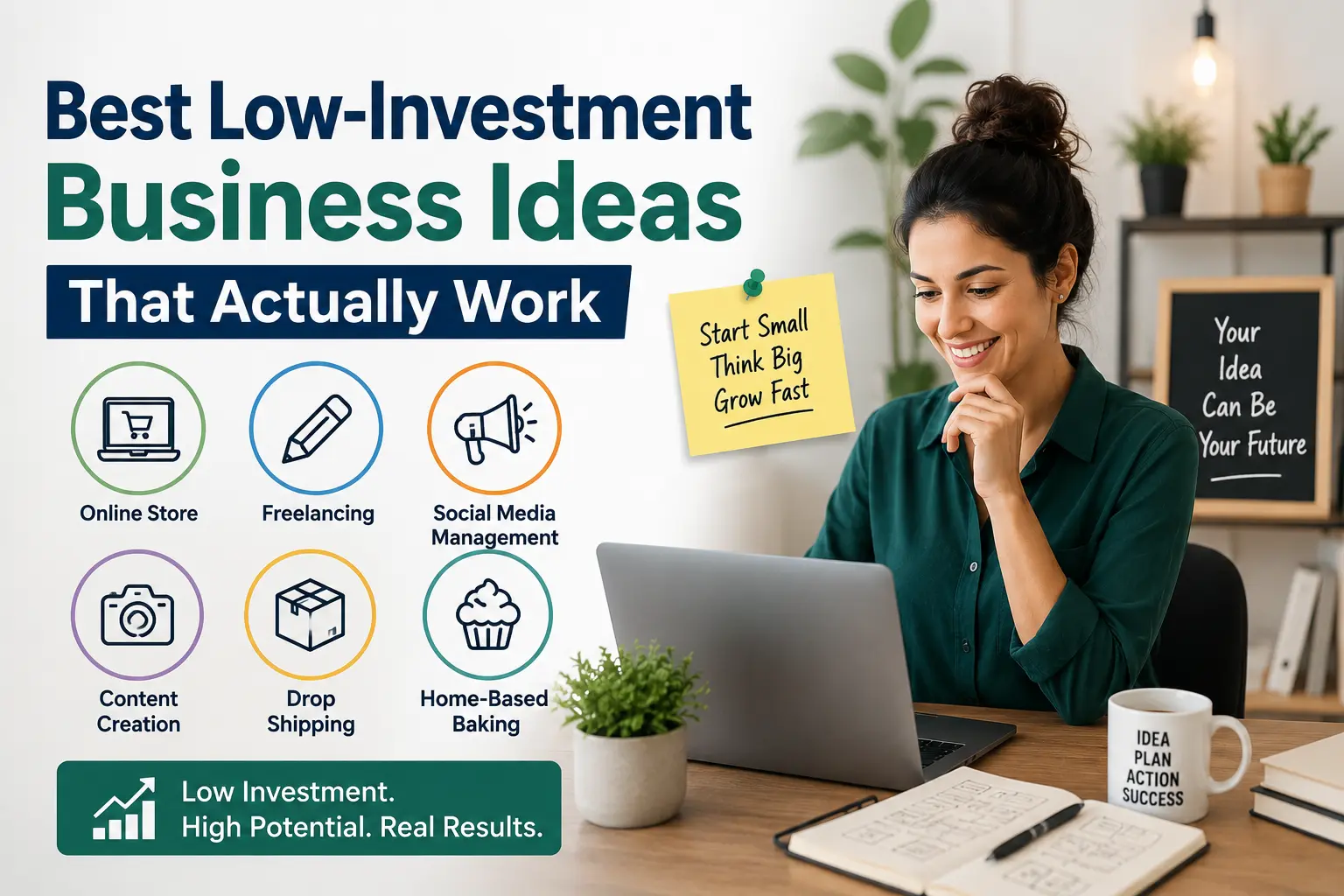
Starting a business doesn’t require a large bank balance or years of corporate experience. What it requires is the right idea matched to real market demand — and the discipline to execute consistently. Many profitable ventures today were built with less than a few hundred dollars and a clear understanding of what people actually need.
The ideas below aren’t theoretical. They’re built around low overhead, scalable income, and genuine earning potential.
Service-Based Businesses That Start With Your Existing Skills
The fastest path to revenue with minimal investment is monetizing what you already know. Skills you’ve developed professionally or personally can become a legitimate business almost immediately.
- Freelance writing or copywriting — Businesses constantly need blog posts, website content, and email campaigns. A laptop and strong writing ability are the only requirements.
- Virtual assistance — Managing emails, calendars, data entry, and research for busy entrepreneurs is in high demand and requires no specialized tools.
- Social media management — Small businesses need consistent online presence but often lack the time. Managing three to five accounts monthly creates reliable recurring income.
- Bookkeeping services — Basic accounting knowledge and affordable software allow you to serve small business owners who can’t justify hiring a full-time accountant.
- Online tutoring — Subject expertise in math, science, languages, or test preparation translates directly into paid sessions with students of all ages.
- Graphic design — Businesses need logos, marketing materials, and social graphics constantly. A free design tool and a portfolio of sample work is enough to land first clients.
Each of these can be started within days, marketed through free platforms, and scaled by raising rates as your reputation grows.
Product-Based Models With Minimal Upfront Stock Risk
Not every product business requires warehousing inventory or manufacturing costs. Several models allow you to sell physical or digital products without the traditional financial risk.
- Print-on-demand — Design custom products like t-shirts, mugs, or phone cases. Items are only produced when a customer places an order, eliminating inventory costs entirely.
- Digital products — Create once, sell repeatedly. E-books, templates, spreadsheets, and course materials generate passive income after the initial creation effort.
- Dropshipping — Source products from suppliers who ship directly to your customers. Your role is marketing and customer service, not logistics or storage.
- Handmade crafts — Candles, jewelry, soaps, and personalized gifts have consistent buyer demand. Starting small at local markets builds both income and customer insight.
- Reselling — Buying discounted or second-hand items and reselling them at a profit through online marketplaces is a proven model that requires only starting capital and sourcing effort.
These models work because they separate the cost of goods from the act of selling — letting you test demand before committing significant money.
Knowledge-Based Businesses With Long-Term Earning Potential
Selling expertise rather than time or products creates businesses that scale without proportional cost increases. Once built, knowledge assets keep generating income.
Coaching is one of the most accessible entries into this category. Life coaches, career coaches, fitness coaches, and business coaches all serve specific audiences willing to pay for structured guidance and accountability.
Creating an online course around a practical skill — photography, productivity, cooking, coding, or personal finance — allows you to earn from each new student without repeating the teaching effort.
Podcasting and content creation, while slower to monetize, build audiences that eventually support sponsorships, memberships, and affiliated product recommendations.
The common thread across these ventures is that your investment is largely time upfront. The financial barrier is low, but the commitment to quality and consistency is what separates those who build sustainable income from those who abandon the idea within months.
The Right Idea Is Only Half the Work
Every business on this list has produced real income for real people — but none of them work passively from day one. The low investment is in money, not effort. Choosing a model that aligns with your skills, your available time, and a market that’s actively spending is what determines whether an idea becomes a business or stays a plan.
Start with one. Execute it well before expanding.
Frequently Asked Questions
Q: What is the easiest low-investment business to start from home?
Virtual assistance and freelance writing have the lowest barriers to entry. Both require only a computer, internet connection, and the ability to communicate professionally.
Q: How much money do I need to start a low-investment business?
Many service-based businesses can be started with under $100 — covering a basic website, a professional email address, and initial marketing materials.
Q: Can a low-investment business become full-time income?
Yes. Many entrepreneurs transition from part-time side income to full-time revenue within 12 to 18 months by reinvesting early earnings and consistently growing their client base.
Q: Which low-cost business ideas work best for beginners with no experience?
Reselling, print-on-demand, and social media management are beginner-friendly because they involve skills that can be learned quickly and tested with minimal financial exposure.
Q: How do I find my first customer for a new low-investment business?
Start within your existing network. Offer a discounted or free initial service in exchange for a testimonial, then use that social proof to attract paying clients through online platforms and word of mouth.