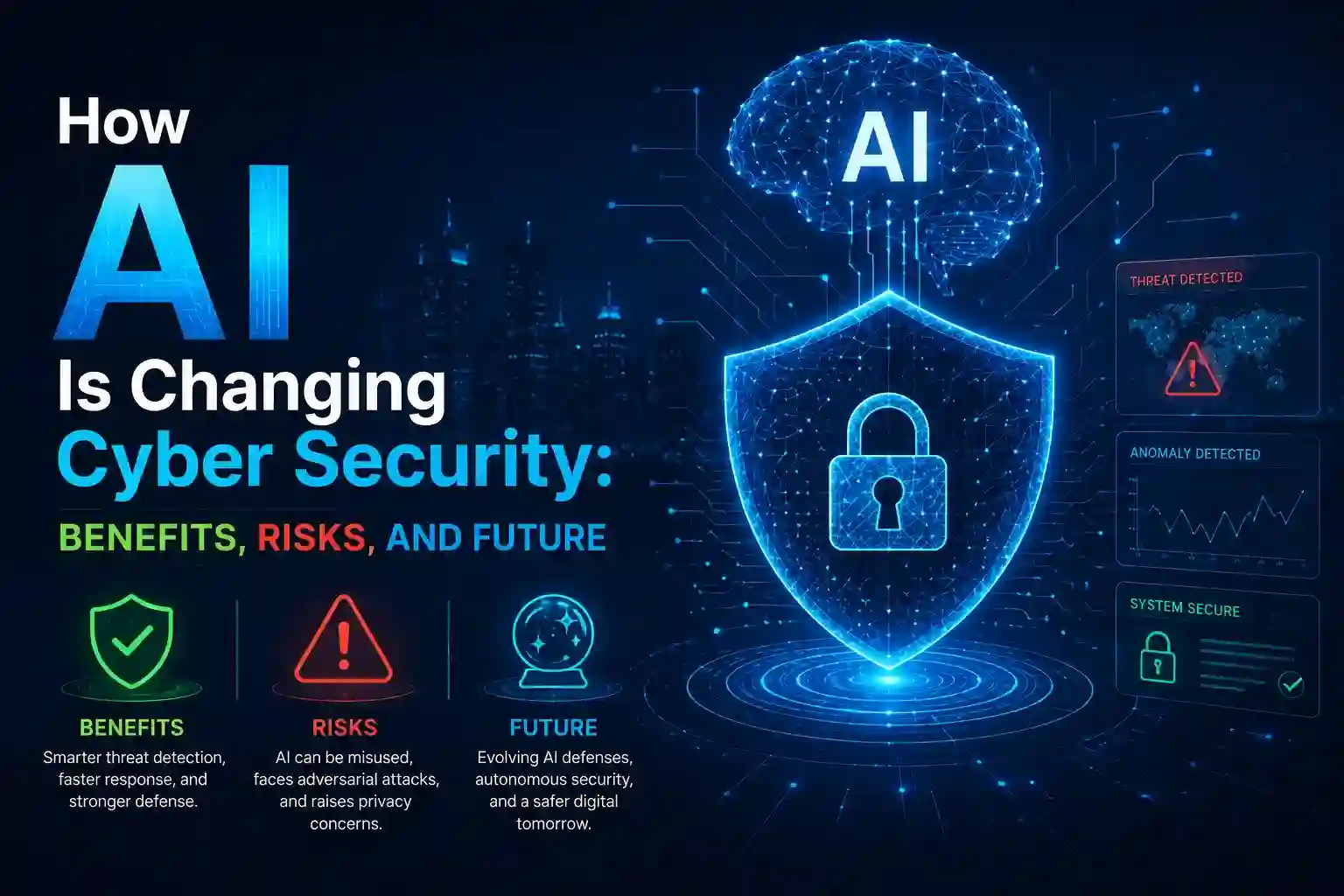

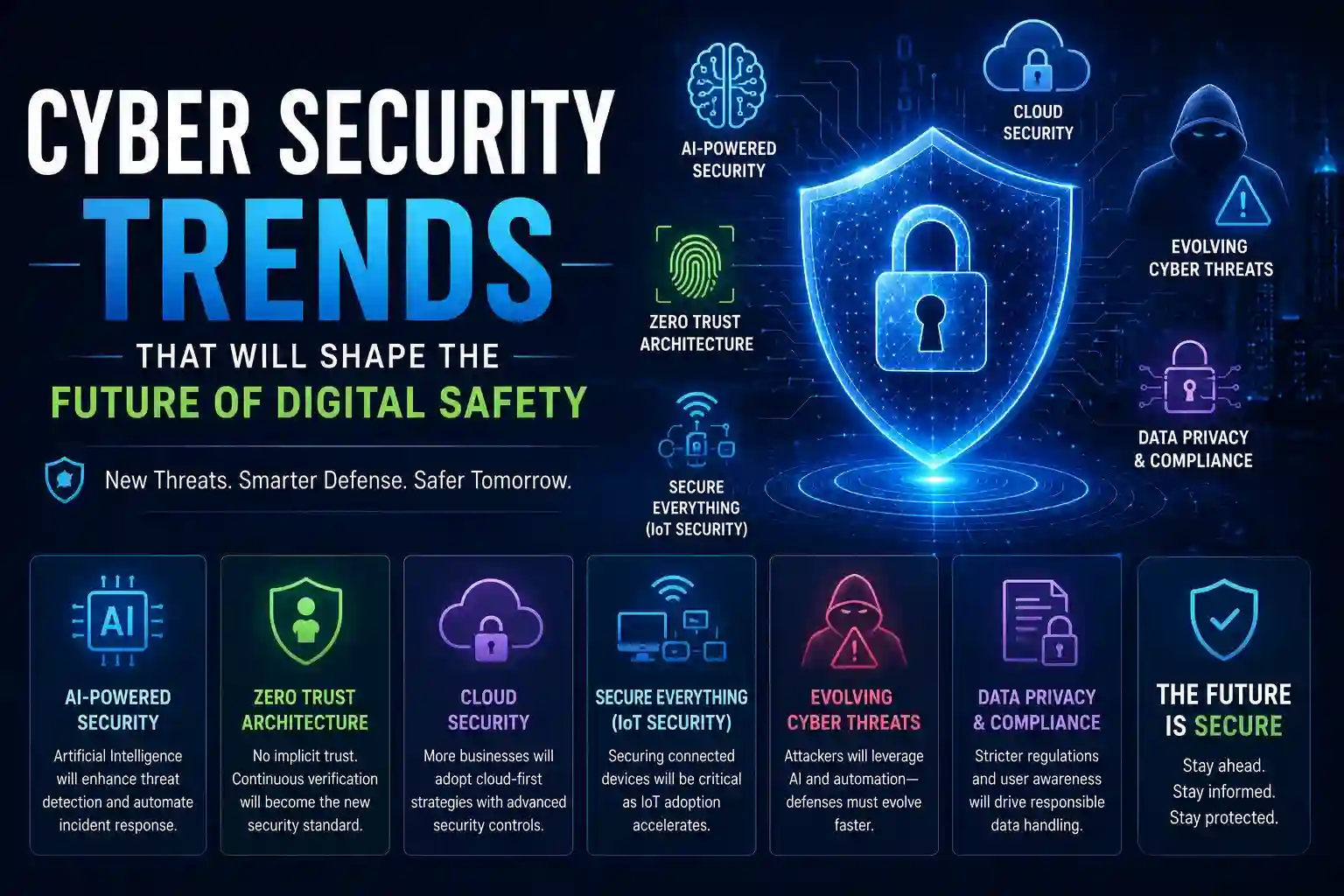
The rules of digital security keep rewriting themselves. Perimeter-based defenses that protected organizations a decade ago assume a clear boundary between trusted internal networks and untrusted external ones — a boundary that cloud adoption, remote work, and mobile devices have made largely meaningless. The cybersecurity trends gaining traction now aren’t incremental improvements to existing approaches. They represent architectural shifts in how organizations think about trust, identity, and threat response.
Understanding where security is heading matters not just for IT teams but for anyone whose personal or professional data lives inside systems these trends are designed to protect.
The Security Architectures Replacing Outdated Defenses
Several foundational approaches to cybersecurity are being retired — not because they failed on their own terms, but because the environments they were designed to protect no longer exist in recognizable form.
The architectural trends redefining how security is built:
- Zero Trust Network Access operates on the principle that no user, device, or application is inherently trusted regardless of network location — every access request is verified continuously against identity, device health, and behavioral context before permission is granted
- Secure Access Service Edge (SASE) converges networking and security into a single cloud-delivered framework, eliminating the performance penalties and security gaps created by routing remote user traffic through centralized on-premise infrastructure
- Identity-first security shifts the primary security perimeter from the network edge to the verified identity — treating compromised credentials as the highest-priority attack vector and investing accordingly in identity governance, privileged access management, and continuous authentication
- Cyber mesh architecture distributes security controls across a flexible, composable framework rather than concentrating them at fixed points, allowing protection to follow data and workloads wherever they move across hybrid and multi-cloud environments
- Supply chain security frameworks extend security scrutiny beyond organizational boundaries to include software vendors, cloud providers, and third-party integrations — recognizing that the most damaging recent breaches entered through trusted supplier relationships rather than direct attacks
- Privacy-enhancing computation allows sensitive data to be analyzed and processed without being exposed in usable form, enabling secure collaboration on confidential datasets across organizational boundaries without the legal and security risks of traditional data sharing
- Automated security policy enforcement replaces manual configuration management with systems that continuously verify security posture against defined policies and remediate drift automatically, closing the gap between policy intent and actual implementation
Each represents a response to specific failure modes in legacy security architecture — not theoretical improvements, but direct answers to how actual breaches have occurred.
Emerging Threat Vectors Driving Security Investment
Security architecture evolves in direct response to the threats it faces. Understanding which attack surfaces are expanding explains why investment is flowing toward specific defensive capabilities.
- Quantum computing threats to encryption loom with increasing urgency as quantum hardware advances toward the computational threshold that would break widely deployed public-key cryptography — organizations handling sensitive long-term data are beginning post-quantum cryptography migrations now, before quantum decryption capability becomes operationally available to adversaries.
- AI-generated attack automation enables adversaries to conduct reconnaissance, identify vulnerabilities, craft personalized deception, and adapt attack techniques in response to defensive measures at speeds and scales that human-operated attack teams cannot match.
- Operational technology and industrial control system attacks target the physical infrastructure — power grids, water treatment, manufacturing — where cybersecurity investment has historically lagged dramatically behind IT environments despite the potentially catastrophic consequences of successful compromise.
- API security exploitation has expanded as application programming interfaces became the connective tissue of modern software — poorly secured APIs expose backend systems, user data, and business logic to attackers who find them more accessible than hardened application front ends.
- Synthetic identity fraud uses AI-generated combinations of real and fabricated personal information to create fraudulent identities that pass traditional verification checks, enabling financial fraud at scale without relying on stolen complete identity packages.
- Satellite and space infrastructure attacks represent an emerging frontier as critical communications, navigation, and earth observation systems become legitimate military and economic targets with cybersecurity postures that haven’t kept pace with their strategic importance.
How Human Factors Are Being Addressed Alongside Technical Defenses
The most sophisticated technical security architecture still fails when human behavior creates exploitable openings. The security industry’s growing recognition of this reality is producing a distinct set of trends focused on reducing human vulnerability rather than simply adding more technical controls around it.
Continuous security awareness programs are replacing annual compliance training — recognizing that one-time education creates knowledge that decays rapidly under the pressure of actual social engineering. Simulated phishing campaigns, real-time coaching triggered by risky user behavior, and role-specific training tied to actual job functions produce measurably better outcomes than generic annual modules.
Behavioral analytics integrated into security systems now monitors user activity patterns to detect compromised accounts operating under legitimate credentials — a capability that addresses the reality that many attackers spend weeks or months operating undetected inside environments after initial access, moving laterally and escalating privileges while appearing as authorized users.
Passwordless authentication is accelerating adoption as organizations recognize that the password itself — not password management policy — is the fundamental vulnerability. Passkeys, hardware security keys, and biometric authentication eliminate the credential theft attack vector rather than hardening it, addressing the root cause rather than the symptom.
Security culture measurement is evolving from subjective assessment to quantitative tracking — monitoring how quickly employees report suspicious activity, how often they follow secure workflow alternatives, and how their risk behavior changes following security incidents. Organizations that measure culture quantitatively improve it more consistently than those that treat it as unquantifiable.
Conclusion
The cybersecurity trends shaping digital safety share a common thread: they address the gaps that attackers have most consistently and successfully exploited, rather than reinforcing defenses that have already proven inadequate. Zero trust eliminates implicit network trust. Post-quantum cryptography protects data before decryption capability arrives. Behavioral analytics catches attackers operating under legitimate credentials. Human-focused programs reduce the social engineering surface that technical controls cannot reach. Organizations and individuals who understand these directions can make security investments that align with where threats are actually heading — not where they were five years ago.
Frequently Asked Questions
Q1: What is zero trust security and why is it becoming the standard architecture?
Zero trust is a security model that eliminates automatic trust for any user, device, or connection regardless of whether it originates inside or outside the organizational network. Every access request is verified against current identity, device health, and behavioral context. It became the standard response to breach patterns showing that perimeter-based trust allowed attackers who breached the outer boundary to move freely inside — a risk zero trust eliminates by treating every access request as potentially adversarial.
Q2: How soon does quantum computing pose a real threat to current encryption?
Cryptographically relevant quantum computers capable of breaking current public-key encryption are not yet operational, but the timeline is actively debated among experts with estimates ranging from five to fifteen years. The concern driving early action is harvest-now-decrypt-later attacks — adversaries collecting encrypted data today intending to decrypt it once quantum capability arrives — making migration to post-quantum cryptographic standards time-sensitive for data with long-term confidentiality requirements.
Q3: What is the difference between cybersecurity and digital safety for individuals?
Cybersecurity broadly refers to the technical and organizational practices protecting systems, networks, and data from attacks. Digital safety encompasses the personal behaviors, awareness, and practical choices individuals make to protect their own information and accounts. Both operate on the same threat landscape but address different layers — technical controls at the system level and informed behavior at the individual level.
Q4: Why are supply chain attacks considered particularly dangerous?
Supply chain attacks compromise a trusted software vendor, service provider, or hardware supplier and use that trusted relationship as the entry point into multiple downstream targets simultaneously. Because the attack arrives through a legitimate, trusted channel, traditional perimeter defenses don’t flag it as suspicious. A single successful supply chain compromise can affect thousands of organizations that share the same vendor — dramatically amplifying the impact relative to direct attacks against individual targets.
Q5: How will passwordless authentication change personal security practices?
Passwordless authentication replaces the shared secret of a password with cryptographic proof tied to a physical device or biometric — something an attacker cannot steal through phishing, data breaches, or credential stuffing. For individuals, it means fewer passwords to manage, no vulnerability to password reuse attacks, and phishing resistance built into the authentication method itself. Adoption is accelerating across major platforms, and most users will encounter passkey options on commonly used services within the next one to two years.