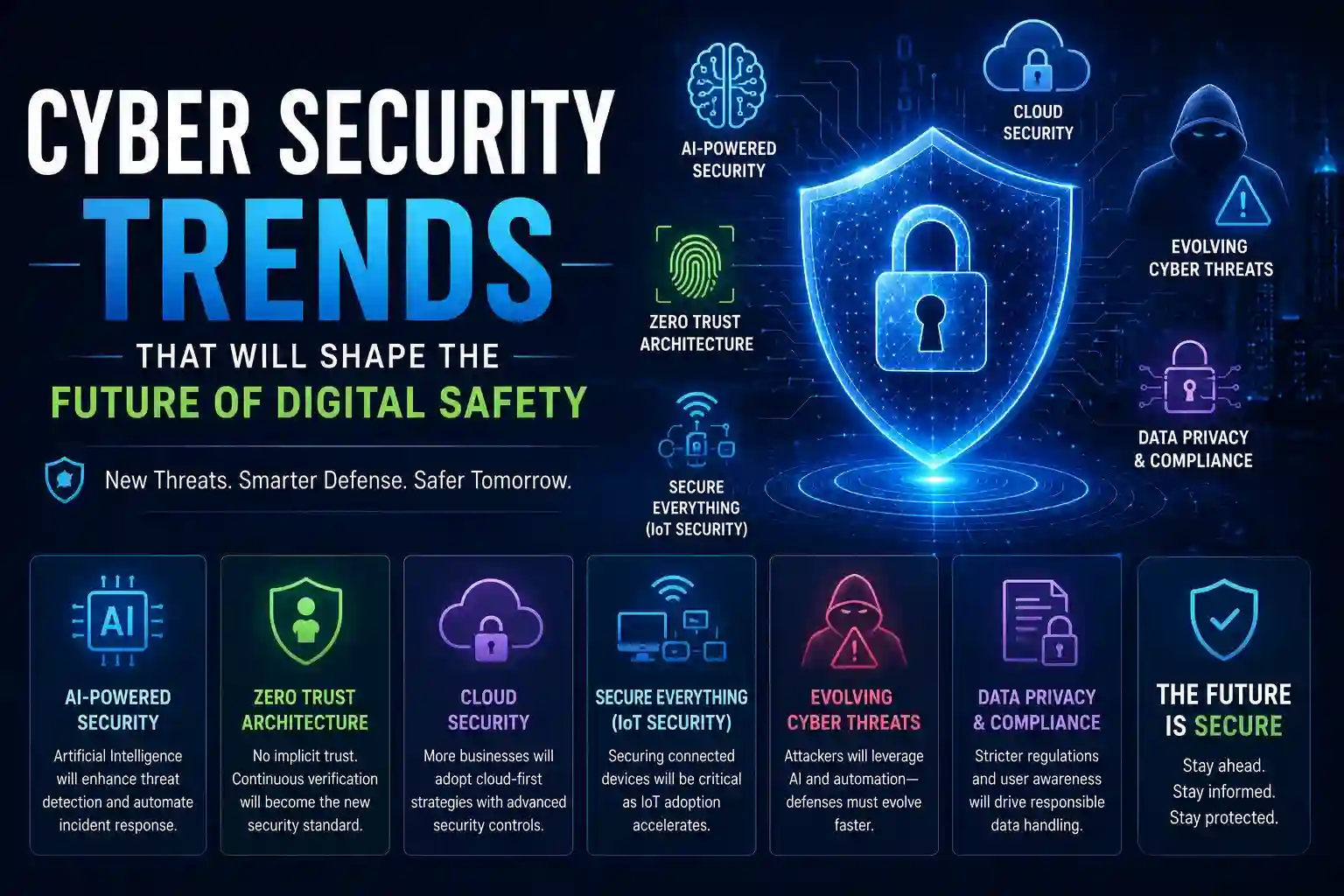

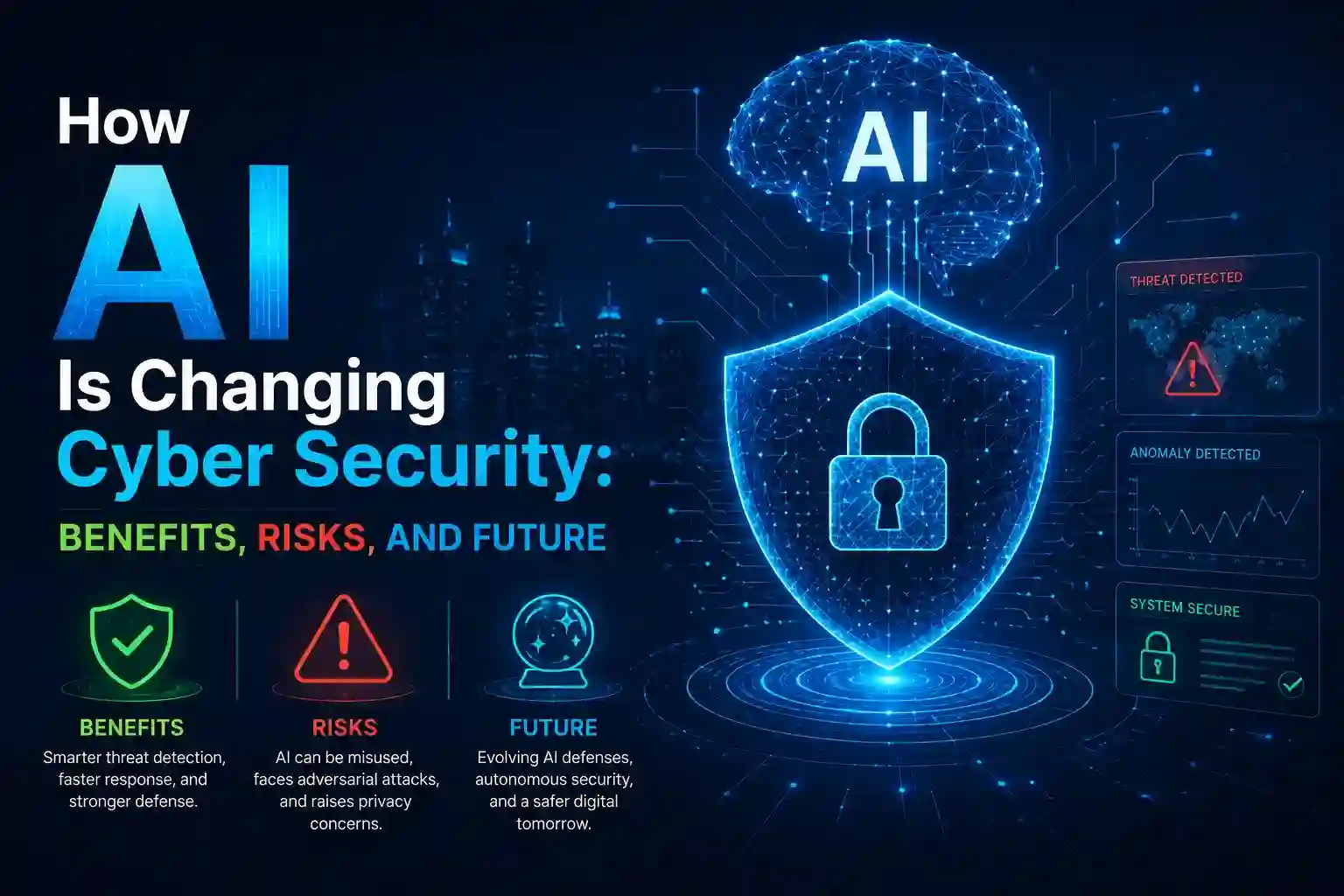
Cybersecurity has always been a contest between attack and defense, with each side adapting to the other’s advances. AI has accelerated that cycle dramatically. Security teams now use machine learning to detect threats in milliseconds. Attackers use the same technology to craft more convincing phishing campaigns, evade detection systems, and probe networks at scale. Understanding both sides of this shift is essential for anyone responsible for protecting digital infrastructure — or simply trying to make sense of where the threat landscape is heading.
How AI Strengthens Cyber Defense
The volume of security events modern organizations generate daily far exceeds what human analysts can manually review. A mid-sized enterprise might log millions of network events per hour. Identifying the handful of genuinely malicious signals buried within that noise was, until recently, a significant bottleneck in security operations.
AI eliminates that bottleneck by processing data continuously, establishing behavioral baselines, and flagging deviations that warrant human attention.
Specific defensive capabilities AI now delivers:
- Anomaly detection at network scale identifies unusual traffic patterns — unexpected data transfers, atypical login times, irregular access to sensitive directories — that rule-based systems miss because they don’t match predefined signatures
- Zero-day threat identification recognizes attack behaviors characteristic of novel malware even when the specific code has never been seen before, closing the window between threat emergence and detection
- Automated incident response isolates compromised endpoints, revokes suspicious credentials, and blocks malicious IP addresses within seconds of detection — far faster than any human-led response workflow
- Phishing email classification analyzes sender behavior, linguistic patterns, and link structures to catch sophisticated social engineering attempts that bypass traditional spam filters
- User and entity behavior analytics build individual baselines for employees and service accounts, detecting credential theft or insider threats when behavior deviates from established patterns
- Vulnerability prioritization ranks the thousands of software vulnerabilities an organization carries by actual exploitability and business impact, helping security teams patch what matters most rather than working through lists chronologically
- Threat intelligence synthesis aggregates and correlates signals from across the internet, dark web forums, and industry feeds to provide early warning of campaigns targeting specific sectors or technologies
Together, these capabilities allow smaller security teams to maintain coverage that previously required significantly larger analyst headcounts.
The Risks AI Introduces to the Threat Landscape
The same capabilities that strengthen defense are available to attackers — and adversaries are applying them with increasing sophistication.
- AI-generated phishing produces personalized deception at scale. Where crafting a convincing spear-phishing email once required manual research into a target’s role, colleagues, and recent activity, AI automates that research and generates believable messages in seconds across thousands of targets simultaneously.
- Adversarial attacks on AI security systems deliberately manipulate input data to fool machine learning models — feeding carefully crafted network traffic that the AI classifies as benign while concealing genuinely malicious activity underneath.
- Automated vulnerability discovery allows attackers to scan for exploitable weaknesses across large target surfaces faster than security teams can patch them, compressing the window between vulnerability disclosure and active exploitation.
- Deepfake-enabled social engineering uses AI-generated audio and video to impersonate executives, IT staff, or trusted contacts during voice calls and video conferences — a vector that traditional security awareness training doesn’t prepare employees to recognize.
- AI-powered malware adapts its behavior based on the environment it detects, altering its code or communication patterns to evade the specific security tools deployed on a target system.
- Credential stuffing acceleration uses AI to optimize the testing of stolen username and password combinations against login systems, dramatically increasing the speed and success rate of account takeover attempts.
Each of these attack vectors exploits the same foundational AI capabilities that defenders rely on — creating a genuine arms race where advantage shifts based on who applies the technology more effectively.
What the Future of AI-Driven Cybersecurity Looks Like
The trajectory of AI in cybersecurity points toward systems that operate with increasing autonomy on both sides of the conflict. Fully autonomous security operations centers — where AI detects, investigates, and remediates threats without human involvement at each step — are already in early deployment at organizations with mature security programs.
This autonomy raises governance questions that the industry is still working through. When an AI system isolates a server or blocks a business-critical application based on a threat assessment, human oversight of that decision becomes both more difficult and more important. False positives at machine speed can disrupt operations in ways that manual processes never could.
The organizations best positioned for the AI-driven security environment ahead share common characteristics. They invest in keeping their AI security models current — models trained on outdated threat data degrade rapidly as attack techniques evolve. They maintain human expertise at the strategic layer, using AI to handle volume while human analysts focus on novel situations the models haven’t encountered. And they apply AI to their own attack surface proactively, running continuous automated penetration testing to find weaknesses before adversaries do.
Conclusion
AI has shifted cybersecurity from a reactive discipline into something closer to a continuous, automated contest. The technology strengthens defense in genuinely transformative ways — speed, scale, and pattern recognition that no human team can match unaided. Those same capabilities are simultaneously lowering the barrier for sophisticated attacks. The future belongs to organizations that treat AI not as a product to purchase but as a capability to develop, maintain, and govern with the same rigor they apply to any other critical security function.
Frequently Asked Questions
Q1: How does AI detect cybersecurity threats faster than human analysts?
AI processes millions of security events simultaneously, establishing behavioral baselines and identifying deviations in real time. Human analysts review events sequentially and rely on experience to recognize patterns — AI scales that pattern recognition across entire networks continuously, without fatigue or attention limits.
Q2: Can AI completely replace human cybersecurity professionals?
Not effectively. AI excels at high-volume detection, routine response, and pattern analysis. Human professionals remain essential for strategic decision-making, investigating novel attack techniques that fall outside established patterns, managing complex incident response scenarios, and overseeing the governance of AI security systems themselves.
Q3: What is an adversarial attack in the context of AI cybersecurity?
An adversarial attack deliberately manipulates data inputs to deceive an AI security model into making incorrect classifications — causing malicious traffic to appear benign, or triggering false positives that overwhelm analysts. It exploits the statistical nature of machine learning rather than traditional software vulnerabilities.
Q4: How are cybercriminals using AI to improve their attacks?
Attackers use AI to generate personalized phishing content at scale, discover vulnerabilities faster, create malware that adapts to evade specific security tools, and produce deepfake audio and video for social engineering. AI reduces the expertise and time required to launch sophisticated attacks, lowering the barrier for less technically skilled adversaries.
Q5: What should organizations prioritize when adopting AI for cybersecurity?
Start with threat detection and response automation — the areas where AI delivers the most immediate and measurable impact. Ensure AI models are regularly retrained on current threat data, establish clear human oversight protocols for automated responses, and run adversarial testing against your own AI systems to identify exploitable weaknesses before attackers do.