
Summary
Luxury watches are valuable, compact and often delicate. Their cases, crystals, bracelets, straps and internal movements can be affected by impact, vibration, moisture or improper handling. A safe shipping plan should combine suitable packaging, accurate valuation, appropriate insurance, reliable transportation and clear delivery procedures. No method can eliminate every transit risk, but preparation can reduce avoidable exposure. This guide explains how to protect a valuable timepiece before, during and after transportation. UNIVAL Logistics helps customers consider practical arrangements for high-value shipments across the United States.
Overview
A luxury watch may be shipped for a private sale, repair, servicing, appraisal, insurance replacement or transfer between business locations. Each situation has different requirements. A watch sent to a repair specialist may need clear intake documentation, while a sale may require proof of condition and confirmed delivery to the buyer. Businesses and individuals should consider the watch’s value, packaging needs, destination, transport method and insurance conditions before dispatch. Customers arranging to ship a luxury watch should also confirm that the selected carrier accepts the item and that the insurance arrangement covers its full journey. UNIVAL Logistics supports practical shipping planning for valuable goods in Los Angeles, New York, Miami, Chicago, Dallas, Houston, Philadelphia, Atlanta, Las Vegas, San Francisco, Boston, Newark and Northern New Jersey.
Key Takeaways
- Record the watch’s value, model, serial number and condition before packing.
- Photograph the watch and its accessories from several angles.
- Use a secure inner container and a strong, discreet outer package.
- Protect the watch from movement, impact, moisture and pressure.
- Confirm carrier acceptance and review insurance limits and exclusions.
- Use tracking and controlled delivery procedures.
- Keep shipment, collection and delivery records.
- Contact UNIVAL Logistics to discuss transportation requirements for valuable timepieces.
Quick Answer: The safest way to ship a luxury watch is to document its condition and value, secure it in suitable protective packaging, confirm carrier acceptance, arrange appropriate transit insurance, use reliable tracking and require delivery to an authorized recipient.
Why Luxury Watches Need Specialized Shipping Protection
Luxury watches are precision instruments. Their value may come from the manufacturer, model, materials, rarity, condition, provenance and market demand. Some pieces also have sentimental or collectible importance that cannot be measured by their purchase price alone.
Even a small impact can damage a crystal, case, crown or bracelet. Strong vibration or rough handling may affect delicate internal components. Moisture can also create problems if the package is exposed to water or if the watch is not properly protected.
The financial impact of a shipping incident can extend beyond repair costs. A damaged collectible may lose resale value, while a missing watch can create disputes between a seller, buyer, repairer or insurer. Proper preparation helps reduce these risks and provides useful evidence if a claim becomes necessary.
Step 1: Document the Watch Before Shipping
Good documentation is one of the most important parts of a secure shipping process. It establishes what was shipped, its condition and its approximate or agreed value before collection.
Record the Watch Details
Prepare a written inventory with the manufacturer’s name, model, serial number where appropriate, case material, bracelet or strap details and included accessories. Record whether the shipment includes the original box, warranty card, purchase documents, spare links or other components.
Avoid placing unnecessary personal information inside or outside the package. Keep sensitive ownership and purchase records in a secure file.
Photograph Its Condition
Take clear photographs before packing. Capture the front, back, sides, clasp, bracelet, crown and visible marks. Photograph any existing scratches, dents or other defects.
If the watch is being sent for repair, record its condition before handing it over. This helps distinguish existing wear from any damage that may occur during transportation.
Establish a Supportable Value
Use a purchase invoice, recent appraisal, dealer documentation or other reliable valuation evidence. For rare or discontinued watches, the original purchase price may not represent the current replacement value.
Ask the insurer which valuation method applies. Market value, replacement value and agreed value can produce different claim outcomes.
Step 2: Prepare the Watch for Transportation
Before packing, make sure the watch is ready for the journey. The correct preparation depends on its design, condition and manufacturer instructions.
Protect the Watch and Its Components
Close the clasp where appropriate and protect the bracelet or strap from scratching the case. If the watch has removable components, keep them organized and secured separately. Avoid applying pressure to the crown, pushers or crystal.
Do not attempt to open the case or remove internal components unless a qualified watch technician has instructed you to do so. Unnecessary handling can introduce dust, moisture or mechanical problems.
Consider the Original Box
The original presentation box may help protect the watch, but it should not automatically be treated as sufficient shipping packaging. Many presentation boxes are designed for display rather than transportation.
If you use the original box, place it inside an additional protective container with suitable cushioning. The outer package should protect against impact and prevent the inner box from moving.
Step 3: Use Secure, Discreet Packaging
Packaging should protect the watch while avoiding unnecessary attention. The goal is to prevent movement, absorb ordinary handling impacts and keep the contents protected from external conditions.
Build a Protective Inner Package
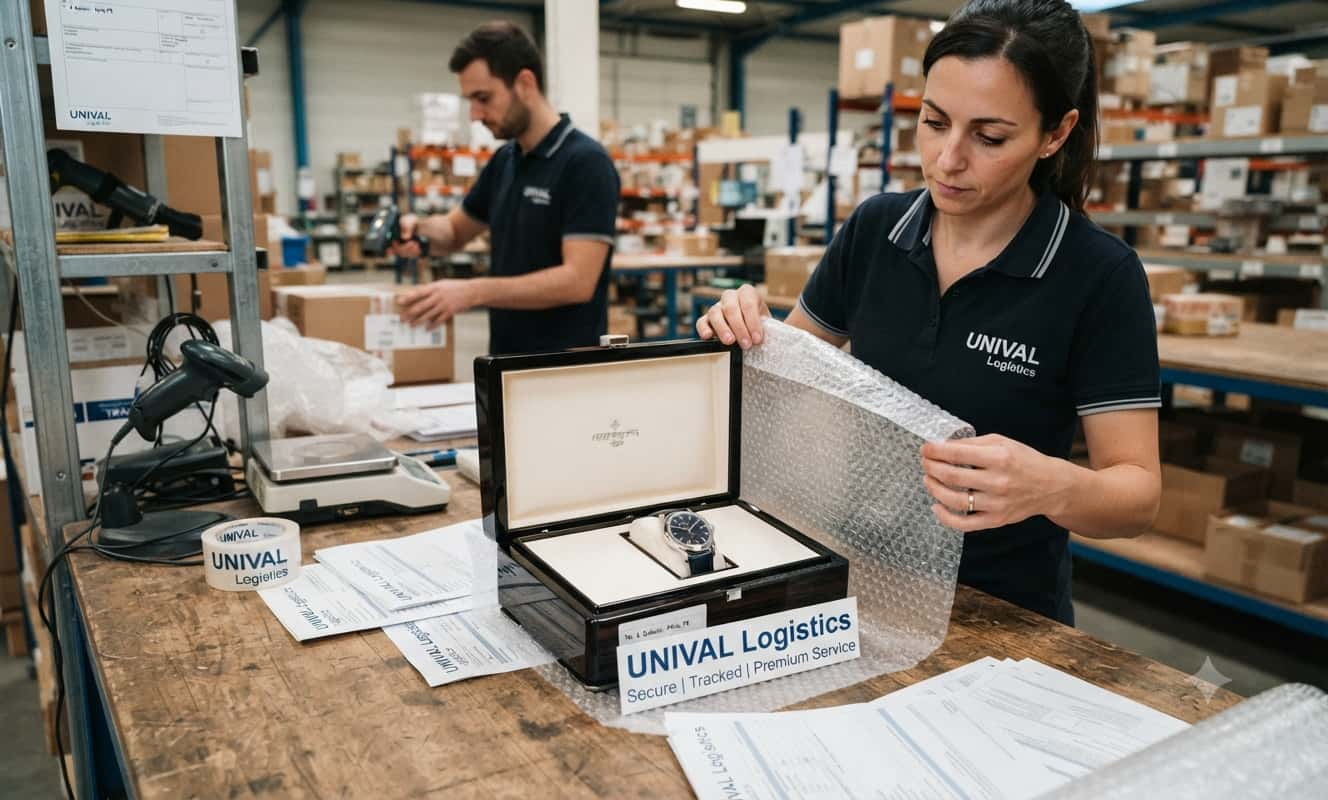
Place the watch in a suitable protective pouch, watch case or padded container. Use clean, non-abrasive materials that will not scratch the case, bracelet or crystal. Secure loose accessories so that they cannot move against the watch.
Do not use excessive pressure or tight wrapping that could damage the crown, bracelet or other delicate parts.
Choose a Strong Outer Box
Place the inner container in a sturdy outer box with suitable cushioning on all sides. Fill empty spaces so that the inner package cannot shift when the box is handled. For particularly valuable or fragile pieces, consider additional protective packaging that meets the carrier’s requirements.
Use strong sealing materials and inspect the finished package before collection. Any security seals should be suitable for the packaging and permitted by the transportation provider.
Keep the Package Discreet
Avoid external labels or markings that reveal the watch’s brand, model or value. Use accurate shipping documentation where required, but do not advertise the contents unnecessarily on the outer package.
Discretion should never mean providing false information. Always declare the contents accurately to the carrier and insurer.
Step 4: Choose Suitable Shipping Insurance
Carrier liability and shipping insurance are not necessarily the same. A carrier may limit compensation under its service terms, and some services may restrict or exclude watches above certain values.
Understand Declared Value
Declared value may establish a carrier’s potential liability limit under its terms. It does not automatically provide comprehensive insurance or guarantee payment of the watch’s full value.
Check whether the carrier accepts luxury watches, whether a maximum value applies and what evidence is required for a claim. Obtain written confirmation when possible.
Review Transit Insurance
A separate transit insurance policy may provide broader protection for eligible loss or damage during transportation. The actual coverage depends on the policy wording.
Before arranging coverage, confirm:
- Whether luxury watches are eligible.
- The maximum insured value per watch and per shipment.
- Whether theft, accidental damage and loss are covered.
- Whether collection, loading, transfers and final delivery are included.
- Whether specific packaging or security arrangements are required.
- The deductible and claim notification deadlines.
- Whether the policy uses purchase value, replacement value or an agreed valuation.
A policy described as comprehensive may still contain exclusions. Read the terms carefully and confirm that the specific watch and transport arrangement are accepted.
Step 5: Select a Reliable Transportation Arrangement
The shipping method should match the watch’s value, destination and delivery requirements. A low-cost service may not be suitable if it lacks appropriate tracking, handling or insurance options.
Check Carrier Acceptance
Confirm that the selected service accepts luxury watches and the shipment’s declared value. Some carriers restrict valuable watches or apply special conditions. Do not assume that a service accepts the item simply because it handles ordinary parcels.
Review Tracking and Handover Procedures
Choose a service with suitable tracking and clear collection records. Record the package count and visible condition at handover. Keep the tracking reference and shipment confirmation in a secure place.
For valuable shipments, consider whether a scheduled collection and direct delivery arrangement is more appropriate than an unattended drop-off.
Avoid Unnecessary Transfers
Every additional handling stage can create another opportunity for delay, loss or damage. Where possible, choose a transportation arrangement that reduces unnecessary transfers and provides clear responsibility at each handover.
UNIVAL Logistics can help customers review shipment details and discuss suitable transportation arrangements for valuable goods.
Step 6: Arrange Controlled Delivery
The shipping process is not complete until the watch reaches the correct recipient. A secure delivery procedure helps reduce the risk of misdelivery or unauthorized collection.
Confirm the recipient’s full delivery details and an appropriate contact number. Where available and suitable, use a signature or identity verification requirement. Make sure the recipient knows when the shipment is expected and understands the inspection process.
The recipient should examine the outer package before accepting it. If there are signs of damage, tampering or a broken seal, take photographs and follow the carrier’s reporting procedure. If the package appears normal, open it carefully and compare the watch and accessories with the original inventory.
Keep the delivery confirmation and any inspection records with the shipment documents.
Common Risks When Shipping a Luxury Watch
Theft and Package Interference
A valuable watch can attract unwanted attention if the contents are obvious. Discreet packaging, accurate documentation, controlled handovers and suitable insurance can help reduce exposure.
Impact and Vibration
Poor cushioning or excessive movement inside the package can cause damage. Use a protective inner container and secure the watch so it cannot shift during handling.
Moisture and Environmental Exposure
Water or condensation can damage watches, particularly when seals are worn or the watch has not been prepared correctly. Use suitable protective packaging and avoid assuming that a water-resistant watch is safe from every shipping-related moisture risk.
Incomplete Documentation
Missing photographs, invoices or serial number records can make it harder to establish the watch’s identity and value. Prepare a complete shipment file before collection.
Insurance Gaps
A carrier’s declared value may not cover the full financial exposure. Review the policy and confirm that the watch, route and shipping method are eligible before dispatch.
What to Do if a Watch Is Lost or Damaged
If a shipment goes missing or arrives damaged, contact the carrier and insurer promptly. Follow their notification deadlines and claim procedures.
Photograph the outer packaging, shipping label, seals and visible damage. Keep all packaging materials and do not discard the box or cushioning. These items may help establish how the incident occurred.
Prepare the purchase invoice, valuation evidence, watch inventory, photographs, shipping confirmation and delivery records. If the watch is damaged, obtain an assessment from a qualified watchmaker or authorized service specialist where appropriate.
Do not authorize major repairs before checking the insurer’s requirements. Some policies require an inspection or written approval before repair work begins. Keep copies of communications and record when each report was submitted.
Common Mistakes to Avoid
One common mistake is using the original presentation box as the only shipping container. Presentation boxes are not always designed to withstand transportation handling. Use an appropriate outer package with sufficient cushioning.
Another mistake is assuming that the watch’s water resistance protects it from every environmental risk. Water resistance depends on the watch’s condition and specifications. It should not replace suitable packaging.
Some shippers also understate the value or use an inaccurate description. This can create problems with carrier acceptance and insurance claims. Provide accurate information and keep supporting records.
Finally, do not wait until collection day to check insurance. Confirm coverage, exclusions and packaging requirements before the shipment enters transit.
Understanding the Cost of Luxury Watch Shipping
The total cost depends on the watch’s value, package dimensions, destination, service level, packaging requirements and insurance conditions. There is no single rate that applies to every timepiece. Request a quotation based on the actual shipment details.
Common cost components include:
- Transportation charge: The cost of moving the package, influenced by distance, dimensions, weight and selected service.
- Insurance premium: The amount charged for eligible coverage, which may depend on the watch’s value, route and security requirements.
- Protective packaging: Costs for a padded inner case, cushioning, reinforced outer box and approved security materials.
- Collection and delivery: Charges for scheduled pickup, controlled handover or special delivery arrangements.
- Additional security services: Potential costs for enhanced tracking, signature requirements or other approved controls.
- Valuation and documentation: Possible fees for appraisals, condition reports or specialist records.
Ask whether the quotation includes packaging, insurance, collection and final delivery. Confirm whether the insurance premium is based on the declared value or another valuation method. UNIVAL Logistics can help customers review their requirements and discuss practical, cost-conscious shipping arrangements.
Important Disclaimer
All cost information should be treated as a baseline estimate of possible cost categories, not a guaranteed quotation. Actual prices are subject to market fluctuations, supplier changes, watch specifications, insurance underwriting decisions and variable logistics fees. Insurance premiums, deductibles, limits and exclusions may differ between shipments and policies. Contact UNIVAL Logistics for the latest and most accurate prices and to discuss the requirements of your watch shipment.
How UNIVAL Logistics Supports Valuable Watch Transportation
Shipping a valuable timepiece requires careful coordination between packaging, insurance, transportation and delivery. UNIVAL Logistics helps customers consider these requirements before arranging the movement of high-value goods.
A suitable plan begins with accurate information about the watch, its value, dimensions, destination and handling needs. Carrier acceptance and insurance conditions should then be reviewed before collection. Packaging and delivery procedures can be selected to match the shipment’s requirements.
Price should be considered alongside reliability and service quality. The lowest initial shipping charge may not offer the best value if the service lacks suitable tracking, handling or insurance arrangements. A cost-effective solution should balance competitive pricing with appropriate protection and clear communication.
UNIVAL Logistics focuses on practical planning and dependable service for valuable shipments. By reviewing requirements before dispatch, customers can make more informed decisions and reduce avoidable uncertainty.
Final Thoughts
There is no way to eliminate every transportation risk, but careful preparation can reduce the chance of loss, theft and damage. Accurate records, suitable packaging, appropriate insurance and controlled delivery all contribute to a more secure shipping process.
Before arranging to ship a luxury watch, confirm carrier acceptance, establish its value, review insurance terms and document its condition. Make sure the package protects the watch without revealing its contents unnecessarily.
A well-planned shipment protects more than the physical timepiece. It also helps protect its financial value and provides a clearer record if a problem occurs. UNIVAL Logistics can help customers review transportation requirements and consider dependable arrangements for valuable goods.
Frequently Asked Questions
1. What is the safest way to ship a luxury watch?
Use suitable inner protection, a strong outer box, discreet packaging, accurate documentation, appropriate insurance and a reliable transportation service. Confirm carrier acceptance and use controlled delivery procedures.
2. Should I use the original luxury watch box for shipping?
The original box can provide useful inner protection, but it should not usually be the only shipping container. Place it inside a sturdy outer box with suitable cushioning to reduce movement and impact.
3. Is a luxury watch automatically insured during shipping?
No. Standard carrier liability may be limited, and some services restrict valuable watches. Confirm whether the carrier accepts the item and whether separate transit insurance is needed.
4. Does declared value provide full watch insurance?
Not necessarily. Declared value may establish a carrier’s potential liability limit under its terms. It does not automatically provide comprehensive coverage or override exclusions.
5. What documents should I prepare before shipping a watch?
Keep the purchase invoice or valuation, model and serial number, photographs, condition records, accessory inventory, insurance confirmation and shipping documents.
6. Should I remove the watch battery before shipping?
It depends on the watch type, manufacturer instructions and carrier requirements. Do not open the watch or remove components without suitable guidance. Confirm any battery-related shipping rules before dispatch.
7. Can a luxury watch be damaged during normal parcel handling?
Yes. Impact, vibration, pressure and movement inside a poorly packed box can cause damage. Suitable packaging and a transportation method appropriate to the watch’s value can reduce these risks.
8. What should I do if my watch arrives damaged?
Photograph the package and damage, preserve the packaging, notify the carrier and insurer promptly, and follow their claim procedures. Obtain a qualified assessment before authorizing major repairs.
9. How much does it cost to ship and insure a luxury watch?
The cost depends on the watch’s value, destination, packaging, service level and insurance conditions. Request an itemized quotation that identifies transportation, packaging and insurance charges.
10. Can UNIVAL Logistics help with valuable watch shipments?
UNIVAL Logistics can help customers review shipment details and discuss suitable transportation requirements for valuable timepieces. Provide the watch’s value, dimensions, destination and handling needs before collection so the arrangements can be assessed.