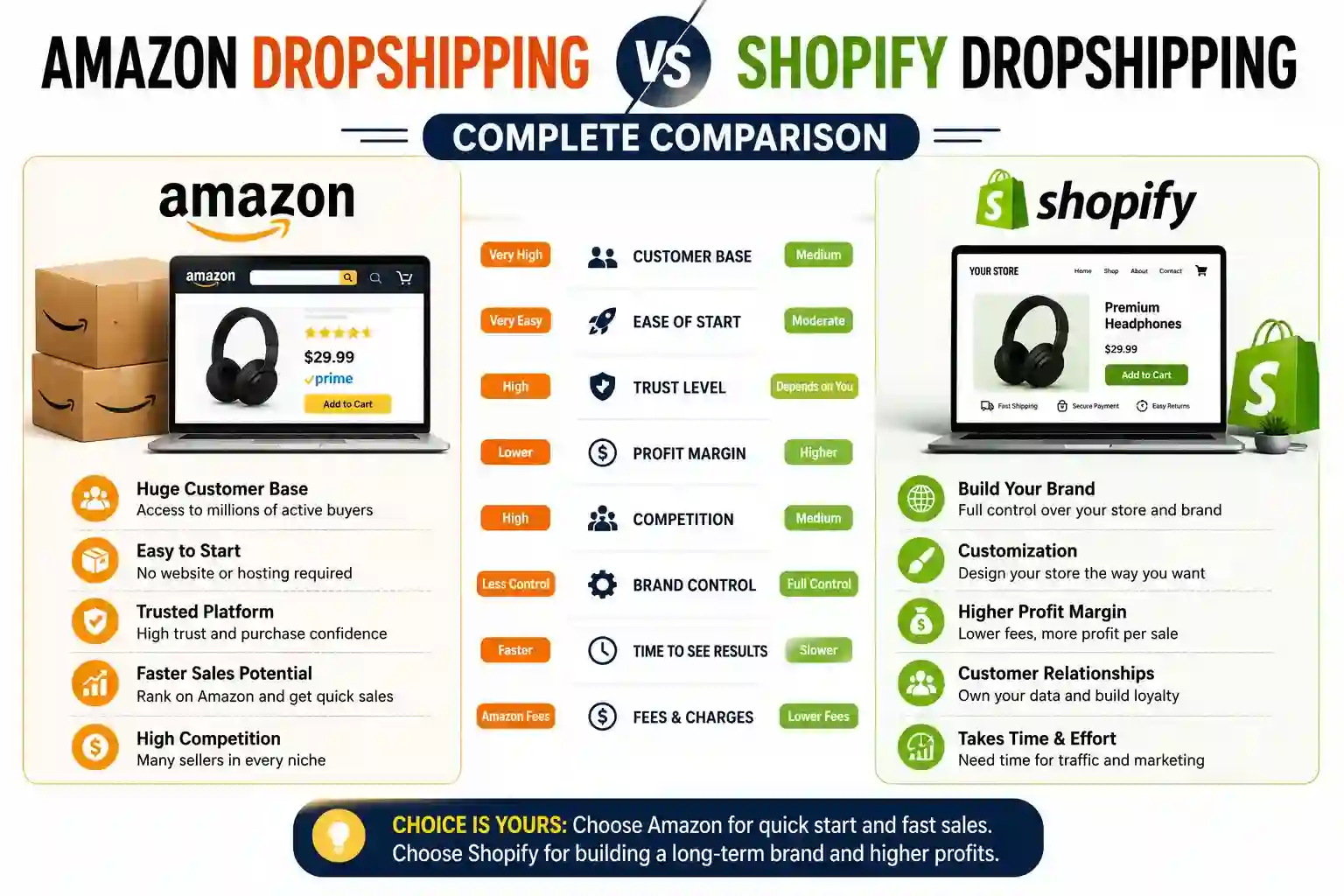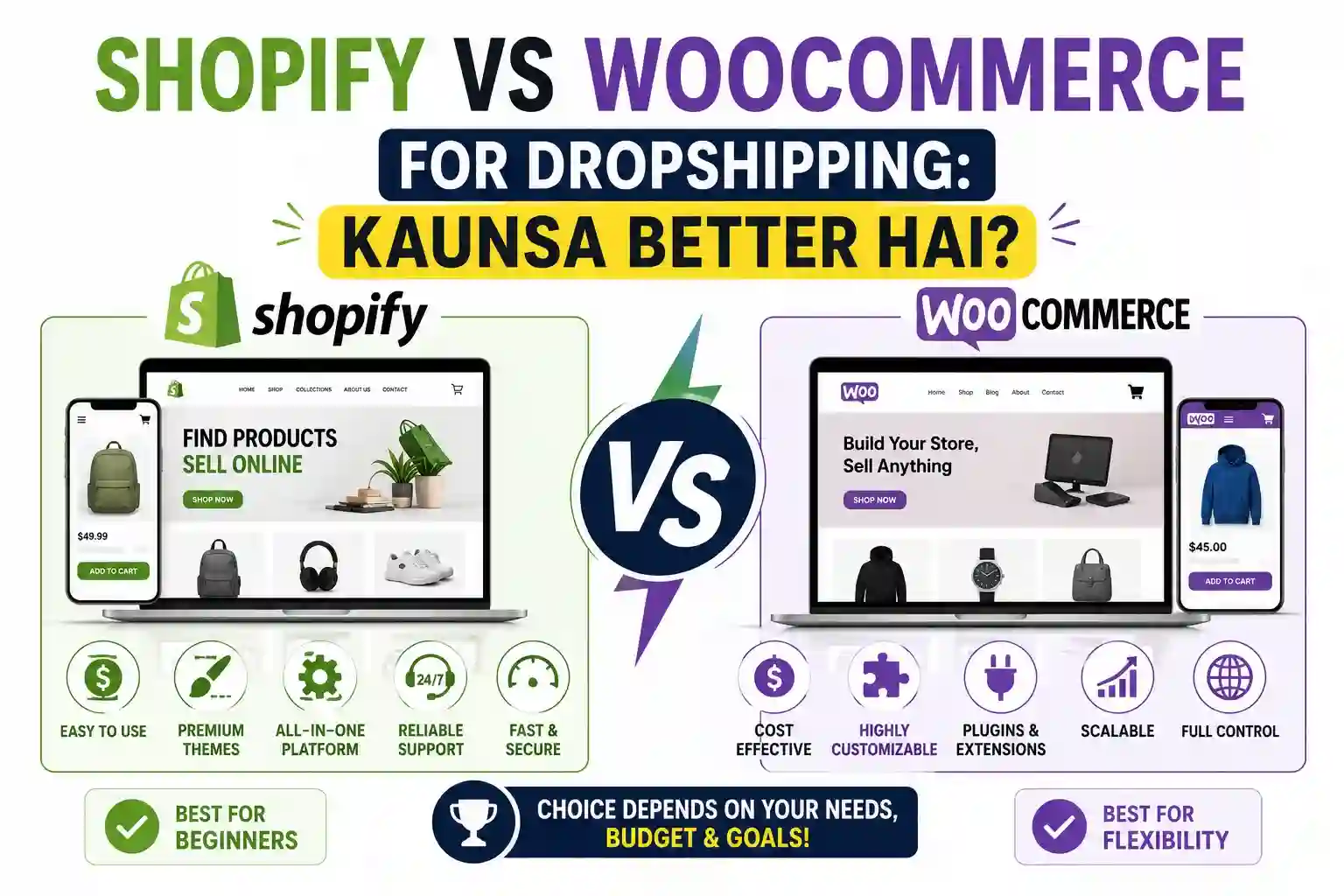

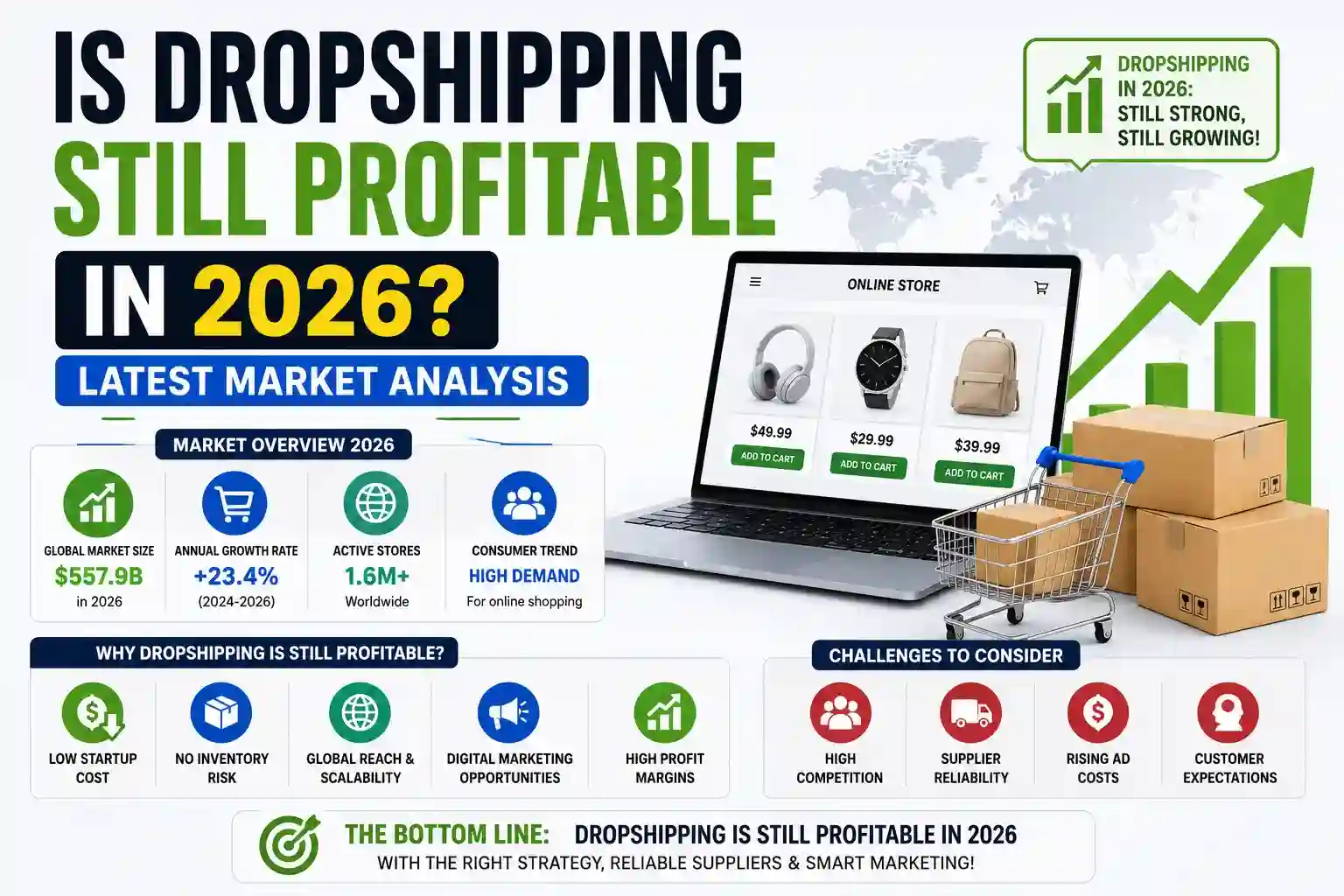
Every year, a wave of new entrepreneurs asks the same question — and every year, the answer requires more nuance than a simple yes or no.
Dropshipping is not dead. But the version of dropshipping that worked in 2018 — find a trending product, run Facebook ads, collect profit — has been replaced by a more competitive, more demanding, and ultimately more sustainable model that rewards genuine business building over shortcut hunting.
The opportunity is real in 2026. The conditions for capturing it have changed significantly.
What Has Actually Changed in the Dropshipping Market
Understanding profitability in 2026 requires separating what’s genuinely different from what’s simply louder noise.
- Customer expectations have risen sharply — Buyers in 2026 expect faster shipping, professional packaging, responsive customer service, and easy returns. The days of 3–4 week shipping from overseas suppliers converting reliably are largely over in mature markets. Sellers who haven’t adapted their supplier networks to meet delivery expectations face higher refund rates and negative reviews that compound quickly
- Advertising costs have increased significantly — The cost of acquiring a customer through paid social advertising has risen considerably compared to early dropshipping years. Margins that absorbed comfortable profit at lower ad costs now require either better conversion rates, higher average order values, or organic traffic supplementing paid channels
- Market saturation exists at the product level, not the model level — Generic, low-differentiation products sold through templated stores to broad audiences face genuine saturation. Niche-specific, branded dropshipping stores targeting specific buyer segments remain highly viable because most saturated-market complaints come from sellers copying each other rather than creating genuine differentiation
- Platform policies have tightened — Both advertising platforms and marketplace sellers face stricter compliance requirements around product claims, intellectual property, and customer experience standards. Sellers who operated in grey areas previously now face account restrictions that eliminate their traffic overnight
- Consumer trust has become a purchase variable — A branded store with professional design, genuine reviews, and transparent policies converts meaningfully better than an anonymous generic store with identical products. Trust infrastructure is no longer optional for consistent conversion
- Supplier quality directly determines business survival — Poor supplier relationships — inconsistent quality, unreliable shipping, inadequate communication — generate customer service volume that erases profit margins and drives negative review accumulation that damages long-term conversion rates
These changes eliminated the lowest-effort dropshipping operations. They haven’t eliminated the model — they’ve raised the floor on what viable execution requires.
Where Dropshipping Remains Genuinely Profitable in 2026
The market conditions that still favor dropshipping are specific and worth understanding clearly before making investment decisions.
- Niche markets with passionate buyers — Categories where enthusiast buyers exist — specific pet breeds, niche hobbies, professional trades, cultural communities — support higher pricing, lower return rates, and stronger word-of-mouth than mass-market general stores targeting broad audiences
- High-ticket dropshipping — Products priced above $200 generate sufficient margin per transaction to absorb advertising costs that would destroy profitability on low-ticket items. Furniture, fitness equipment, outdoor gear, and specialty electronics operate in ranges where single sales generate meaningful income
- Domestic and regional supplier networks — Dropshippers who’ve replaced overseas suppliers with domestic or regional alternatives solve the shipping expectation problem structurally. Faster delivery, better quality control, and simpler returns create customer experience that supports premium pricing and repeat purchases
- Private label and branded dropshipping — Working with suppliers who allow custom packaging, branded inserts, and exclusive product variations creates differentiation that generic competitors cannot replicate by simply listing the same product
- B2B dropshipping — Selling to businesses rather than individual consumers reduces advertising costs, increases average order values, and generates repeat purchase relationships that consumer dropshipping rarely produces
- Subscription and consumable products — Items that buyers reorder regularly — supplements, pet supplies, cleaning products, specialty foods — build recurring revenue that makes customer acquisition cost sustainable over the customer’s lifetime value rather than a single transaction
The Honest Profitability Picture for 2026
Dropshipping profitability in 2026 is real but contextual. It exists reliably for sellers who approach it as a genuine business — with supplier vetting, brand building, margin discipline, and customer experience investment. It remains elusive for those treating it as a passive income shortcut requiring minimal ongoing attention.
The operational requirements are higher than they were five years ago. The ceiling on what’s achievable has also risen — because the sellers who’ve adapted their models have built more defensible businesses than the earlier generation of dropshippers ever did.
Sustainable dropshipping in 2026 looks less like finding a winning product and more like building a brand around a category — with supplier relationships, customer retention systems, and organic traffic channels supporting the business independently of any single advertising platform.
That model works. It has always worked. The difference is that in 2026, it’s the only model that does.
Frequently Asked Questions
Q: What profit margins should dropshippers expect in 2026?
Sustainable dropshipping operations typically target 20–40% gross margins before advertising costs. Net margins after paid traffic usually land between 10–20% for well-optimized stores. High-ticket and niche products regularly achieve higher net margins because advertising spend per sale doesn’t scale proportionally with product price.
Q: Is dropshipping oversaturated in 2026?
Oversaturation exists at the generic product and broad-market level. Specific niches, particularly those requiring product knowledge that casual competitors lack, remain genuinely underserved. Saturation is a product and positioning problem — not an inherent characteristic of the dropshipping model itself.
Q: How much starting capital is realistically needed for profitable dropshipping in 2026?
A viable dropshipping operation in 2026 realistically requires between $500 and $2,000 to cover store setup, initial advertising testing, and operational costs through the validation phase. Lower budgets are possible with organic traffic strategies but extend the timeline to profitability significantly.
Q: Which dropshipping niches are most profitable in 2026?
Home improvement tools, pet accessories for specific breeds, outdoor and survival gear, ergonomic workspace products, and specialty kitchen equipment consistently show strong margins and repeat purchase behavior. These categories share high buyer intent, passionate customer bases, and sufficient price points to support advertising costs.
Q: Can someone start dropshipping in 2026 with no prior ecommerce experience?
Yes — but with realistic expectations. The learning curve is steeper than early dropshipping guides suggest. First-time dropshippers should expect three to six months of testing, iteration, and loss management before reaching consistent profitability. Those who treat early losses as tuition rather than failure signals are the ones who eventually build sustainable operations.